10.05.–06.06.2026
Duo Show by Jeanne Tara & Mathias C Pfund
Curated by Victor Sala


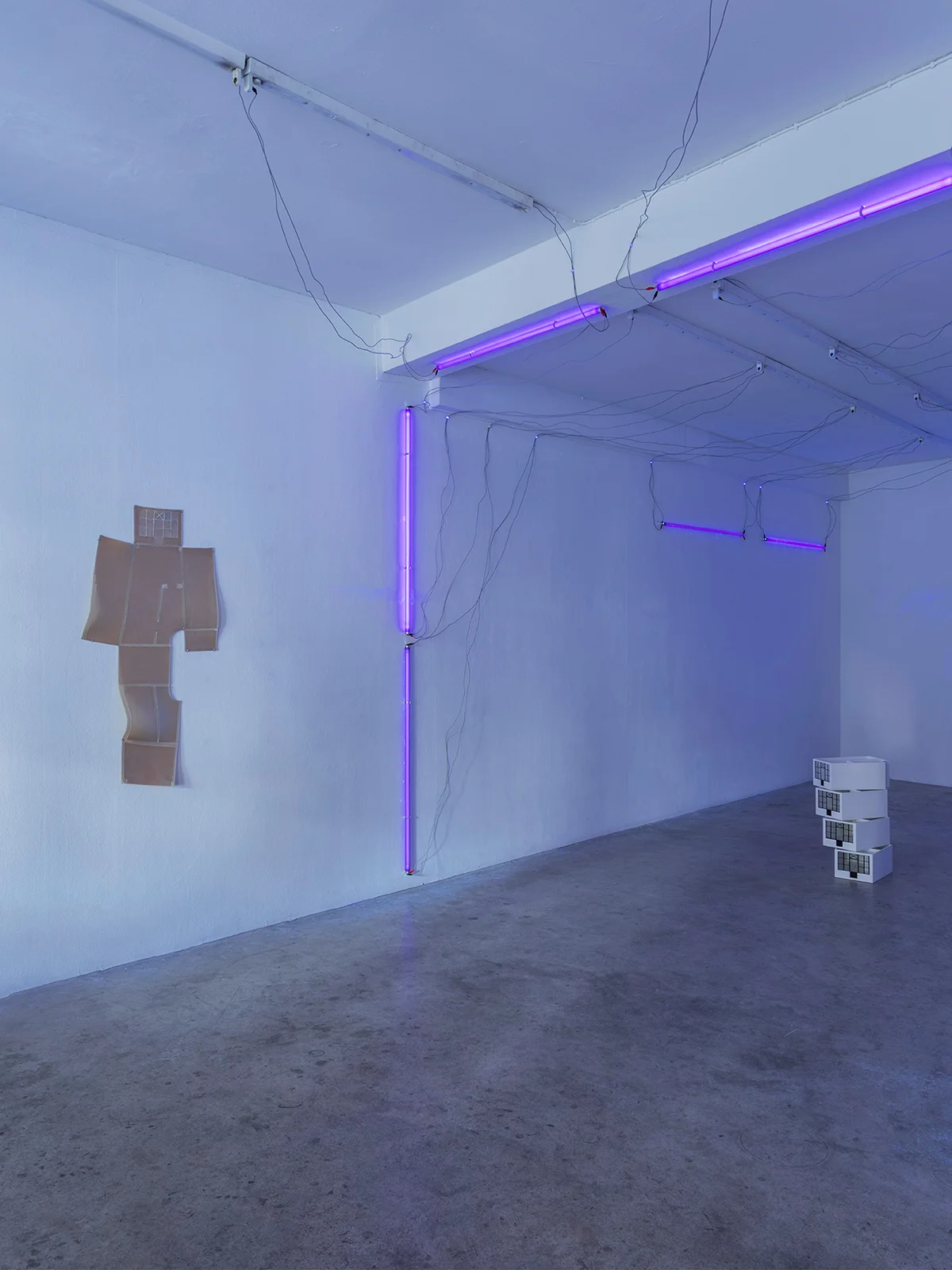
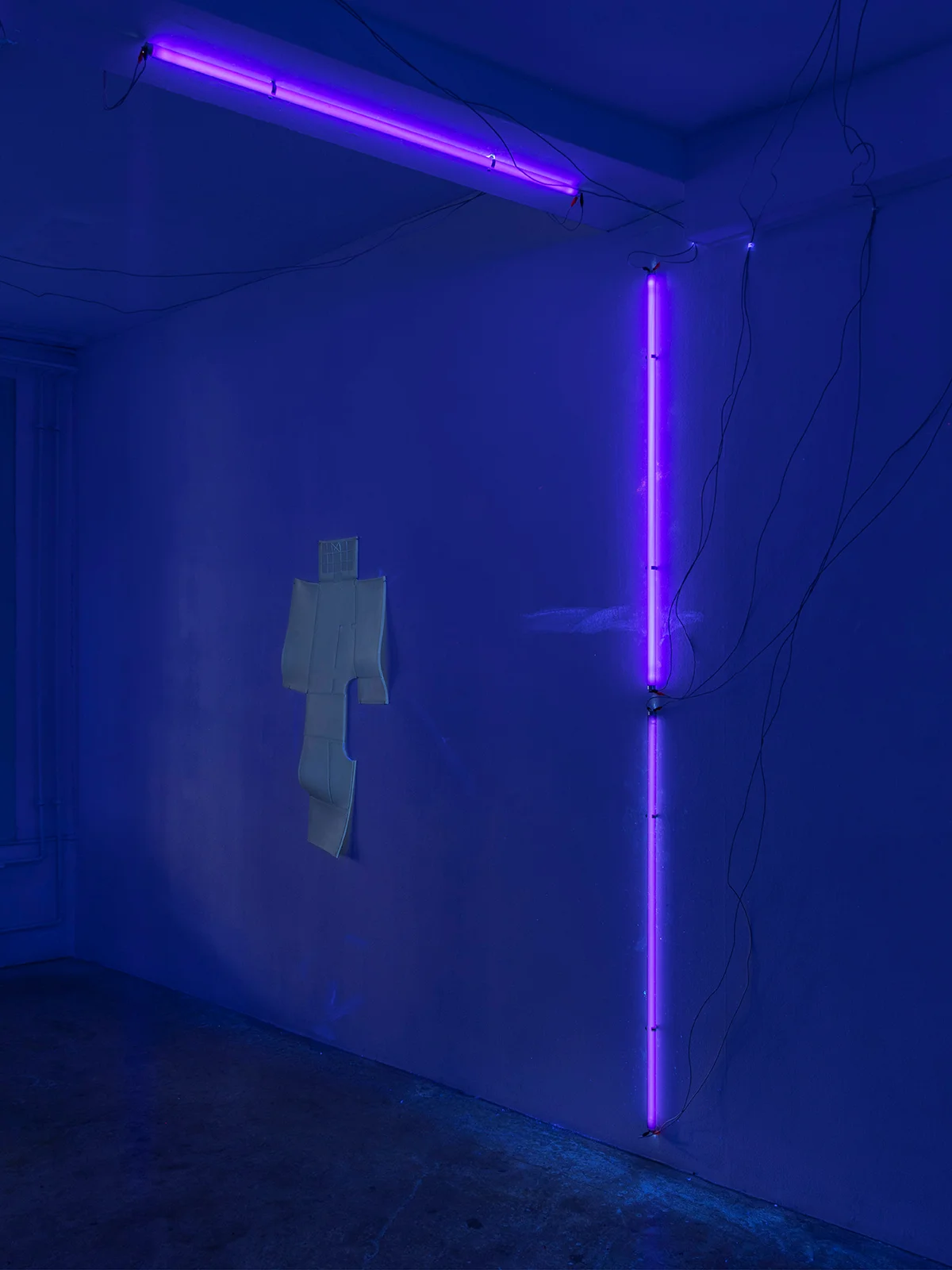
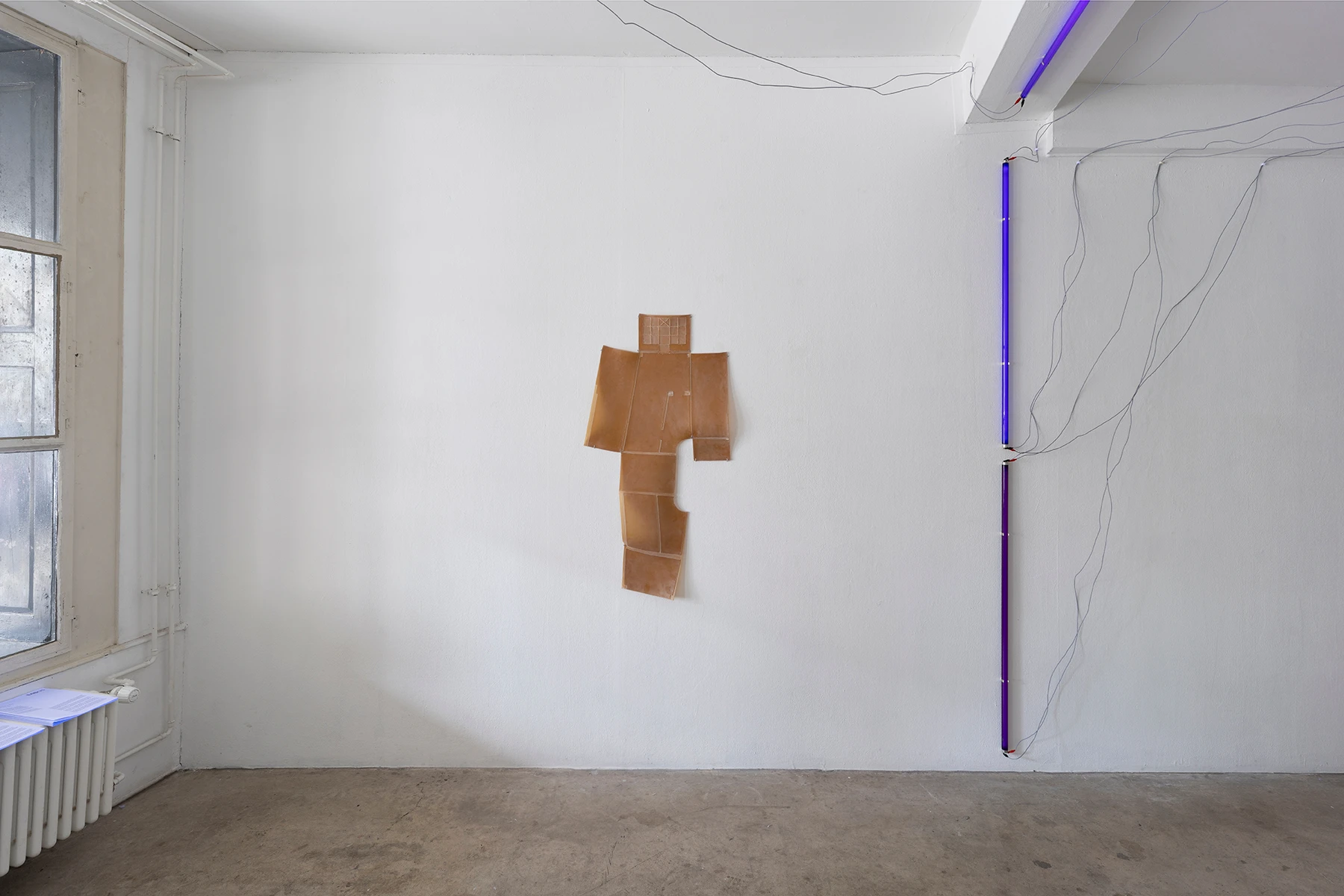
left: If walls had ears, 2026, Jeanne Tara, 160 x 120 x 0.5 cm, Latex
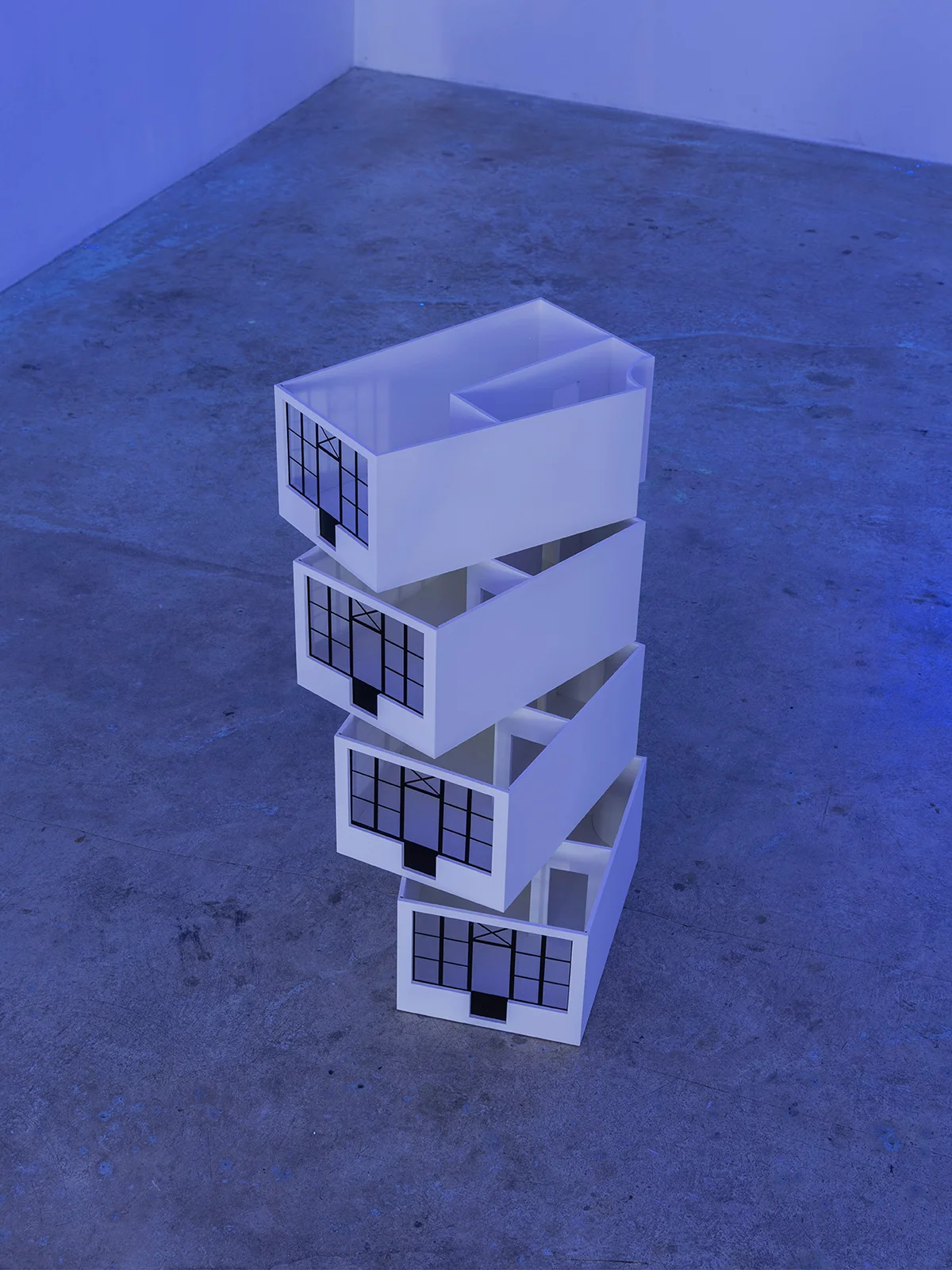
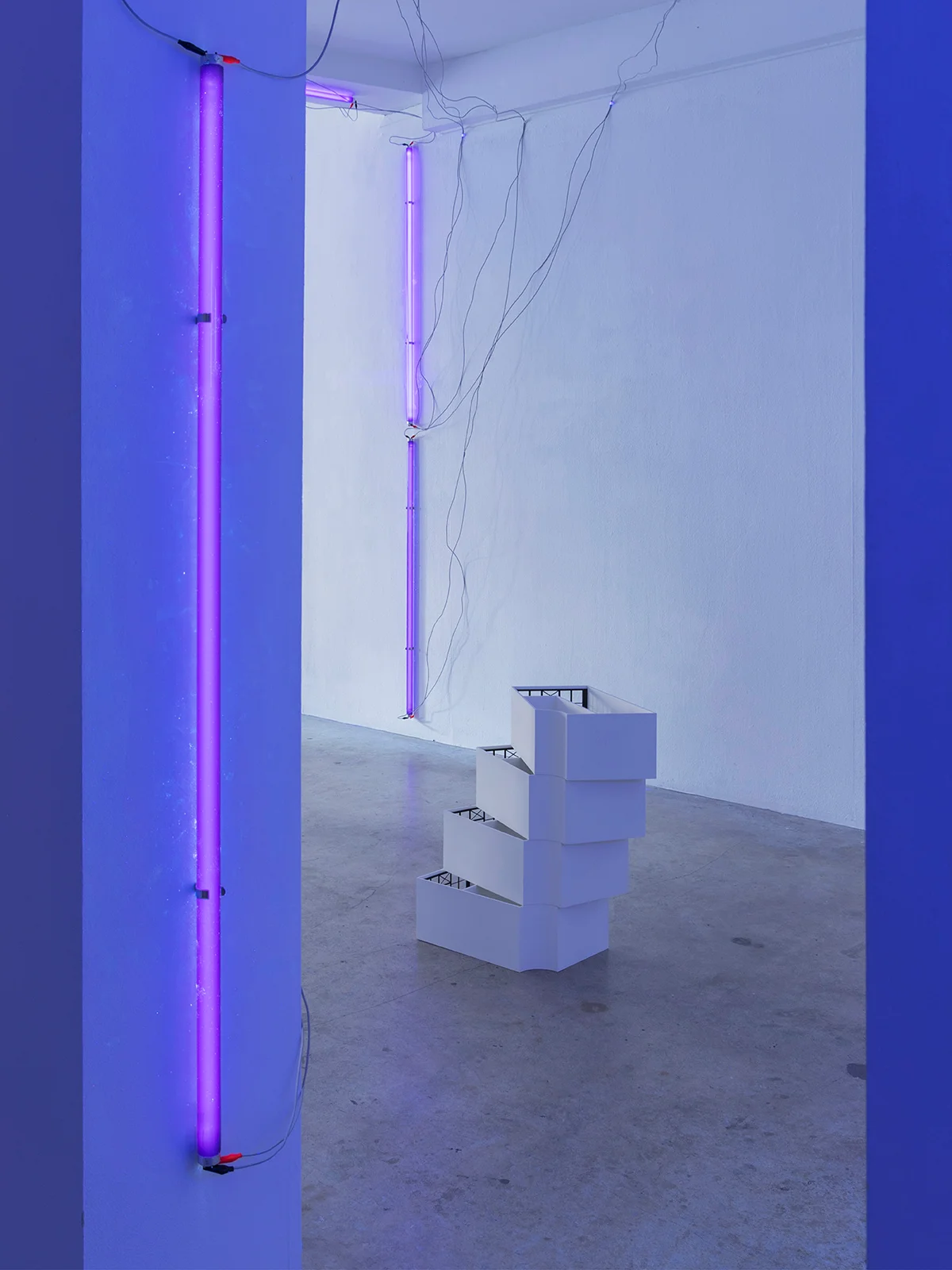
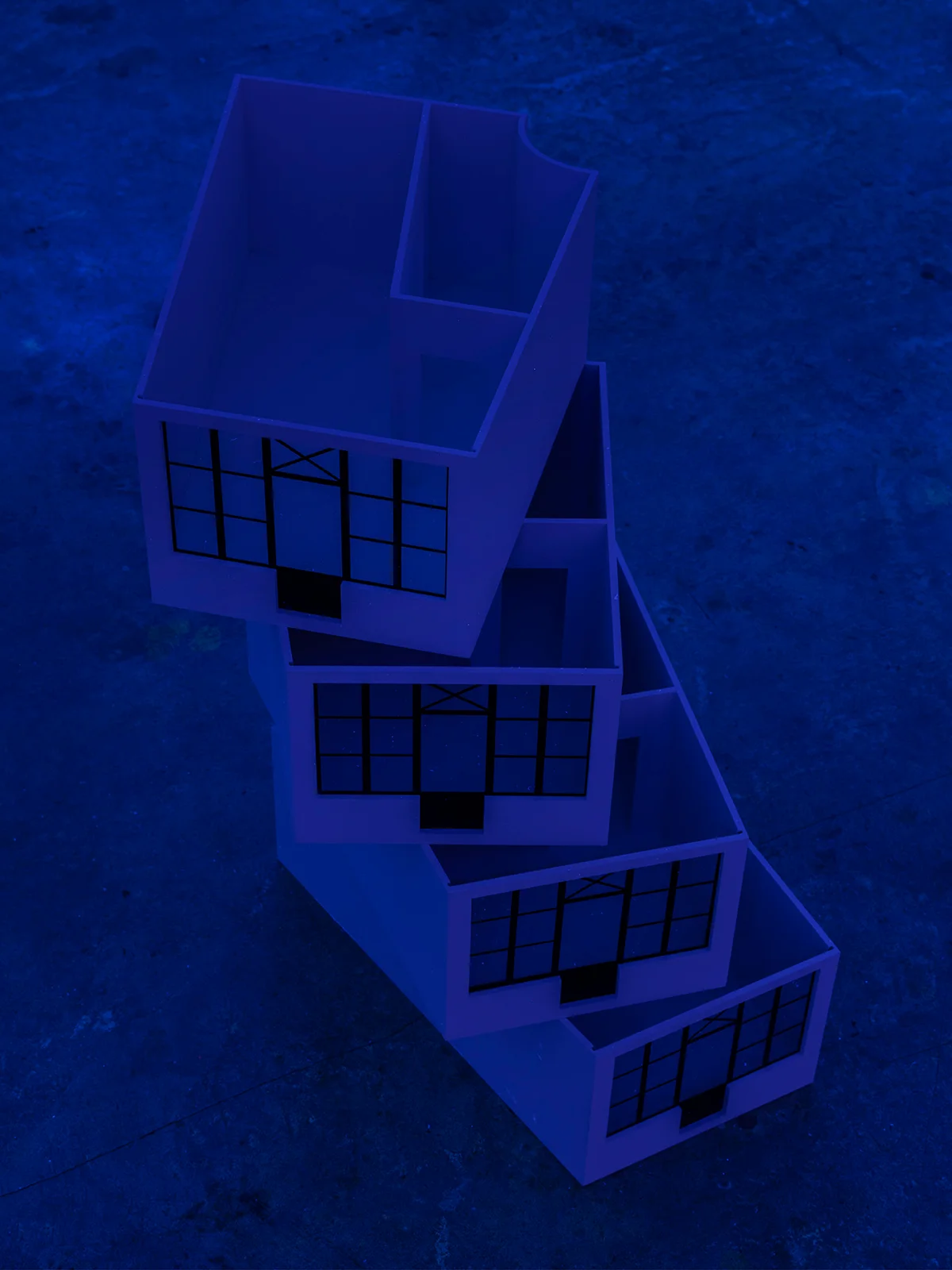
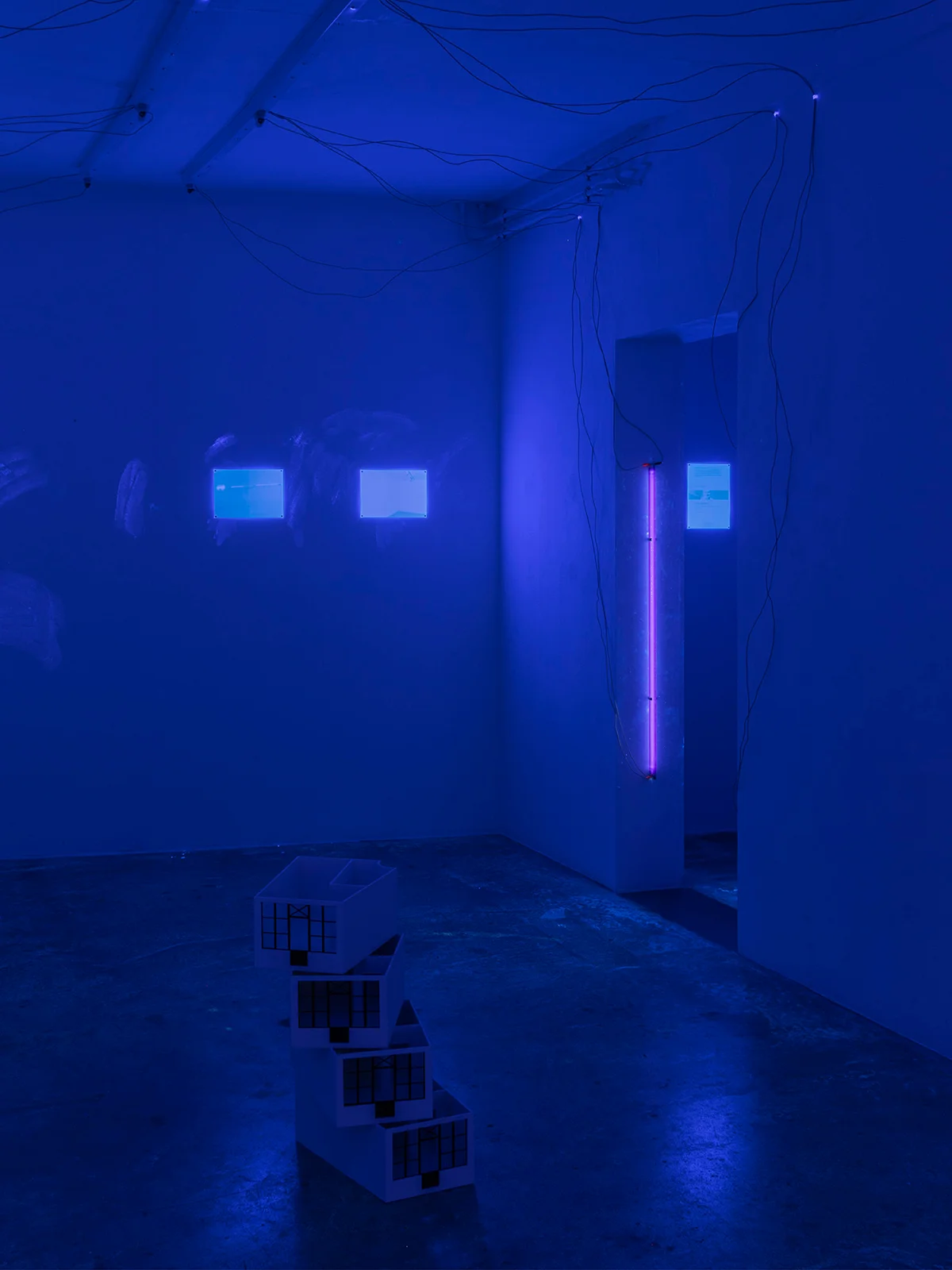
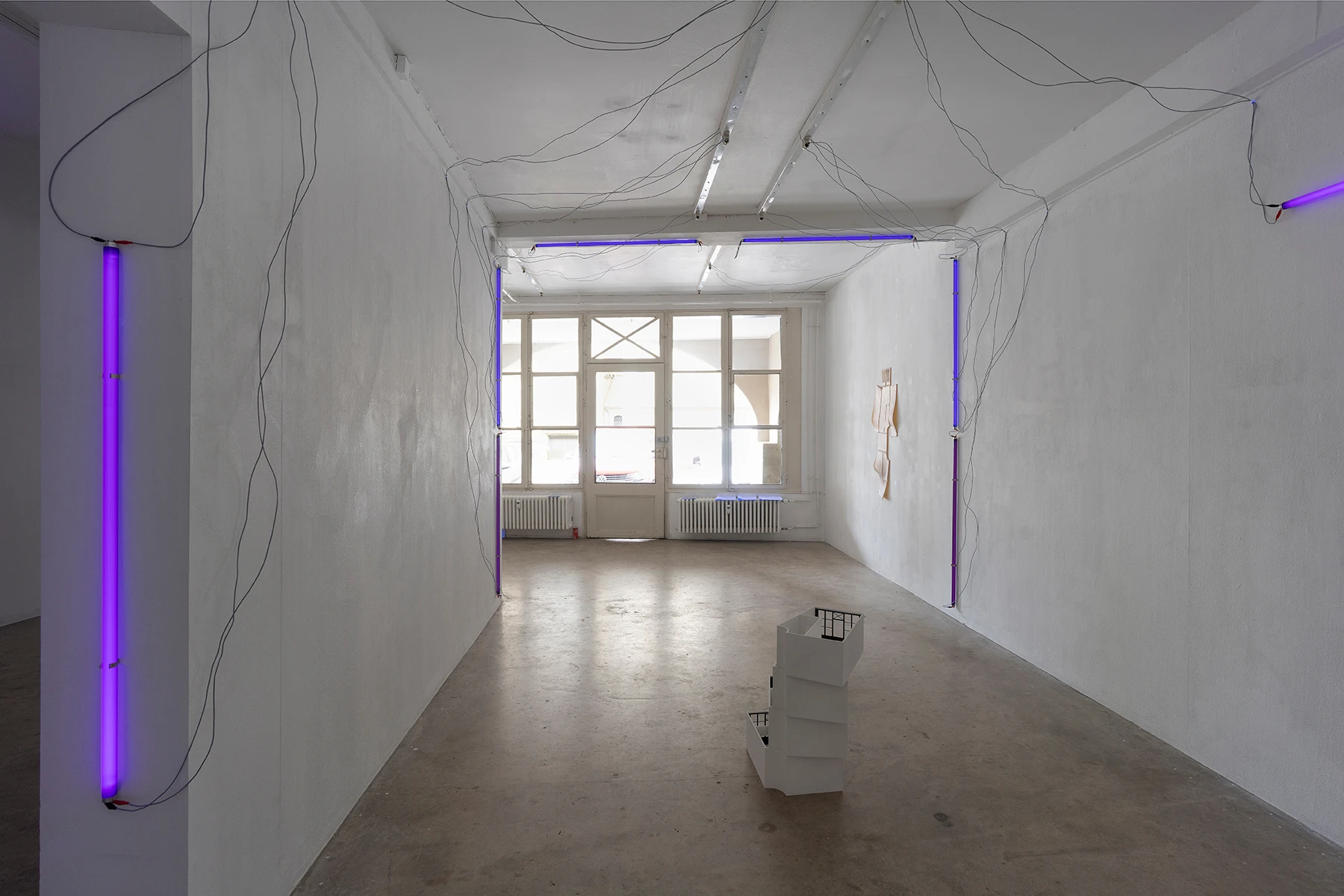
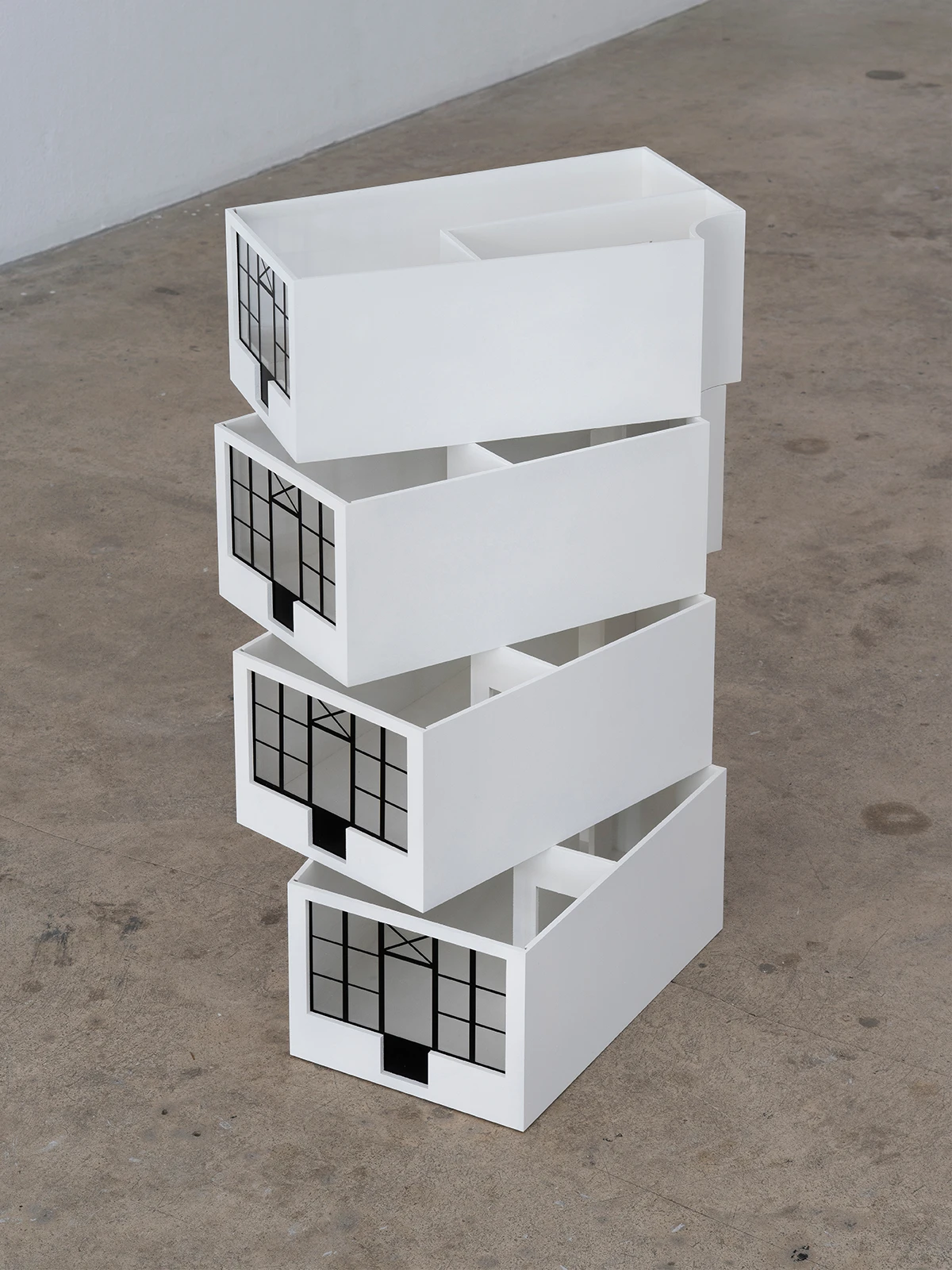
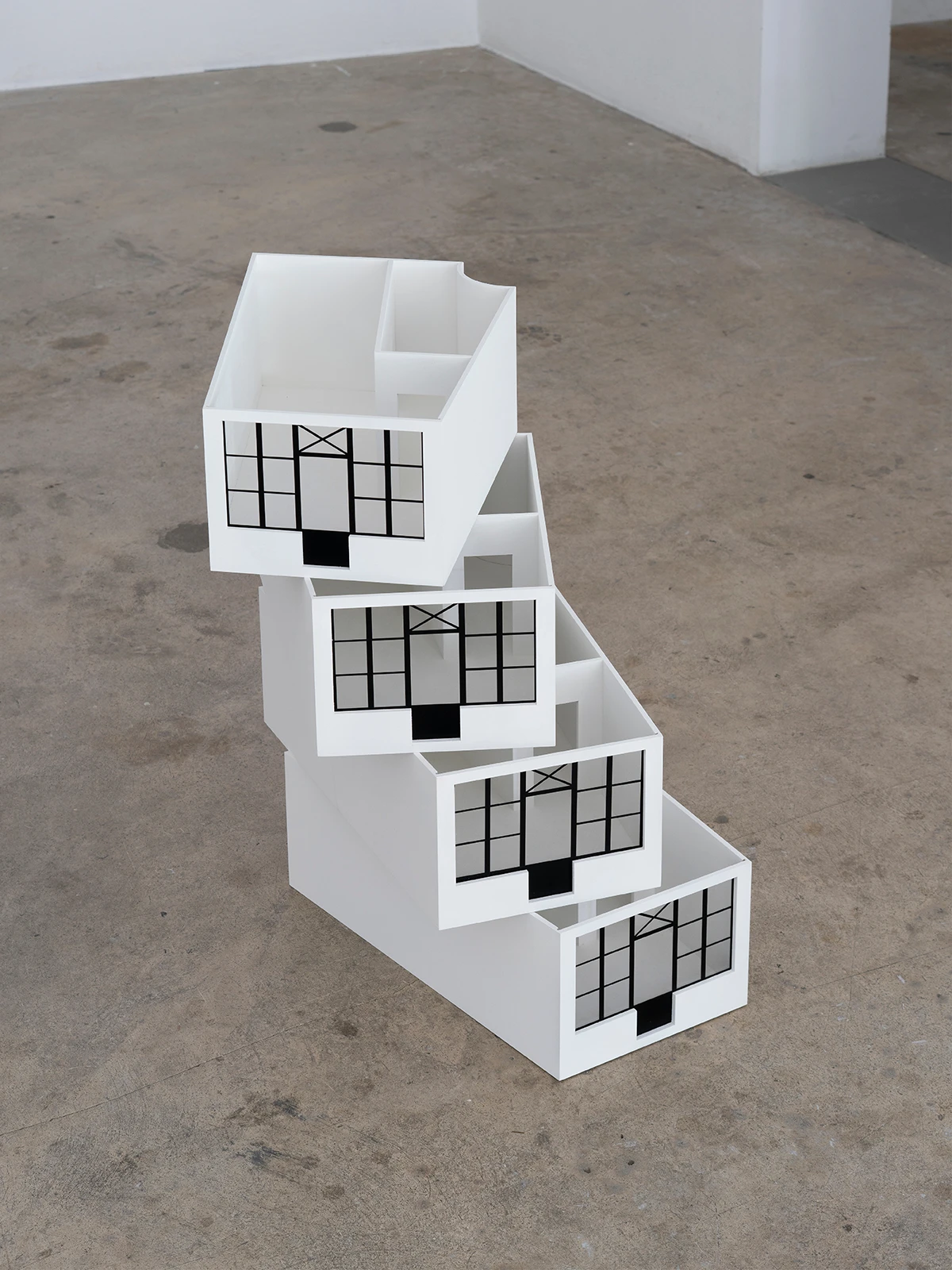
Milieux, 2026, Jeanne Tara, 62 x 40 x 60 cm Holz, Plexiglas
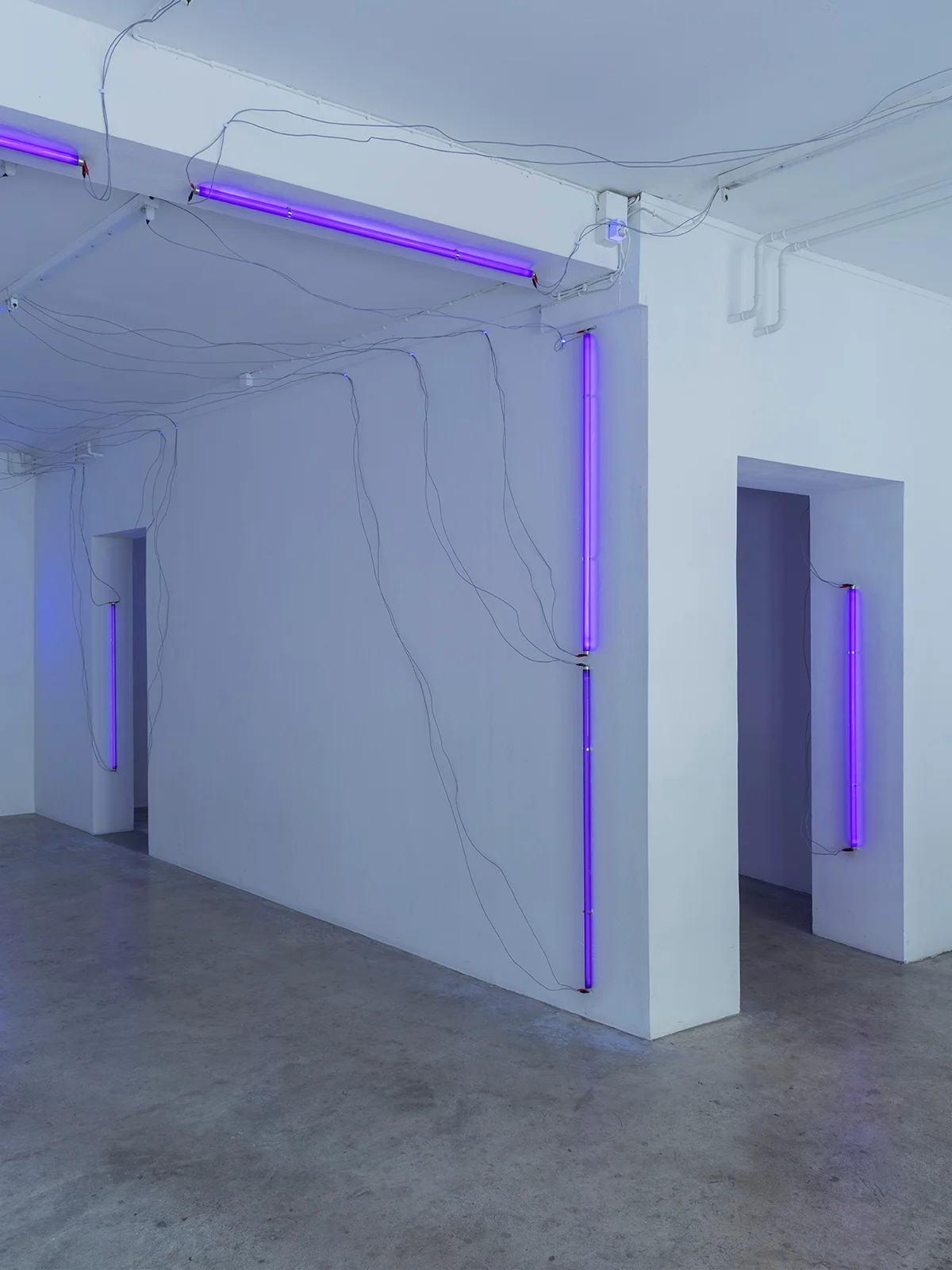
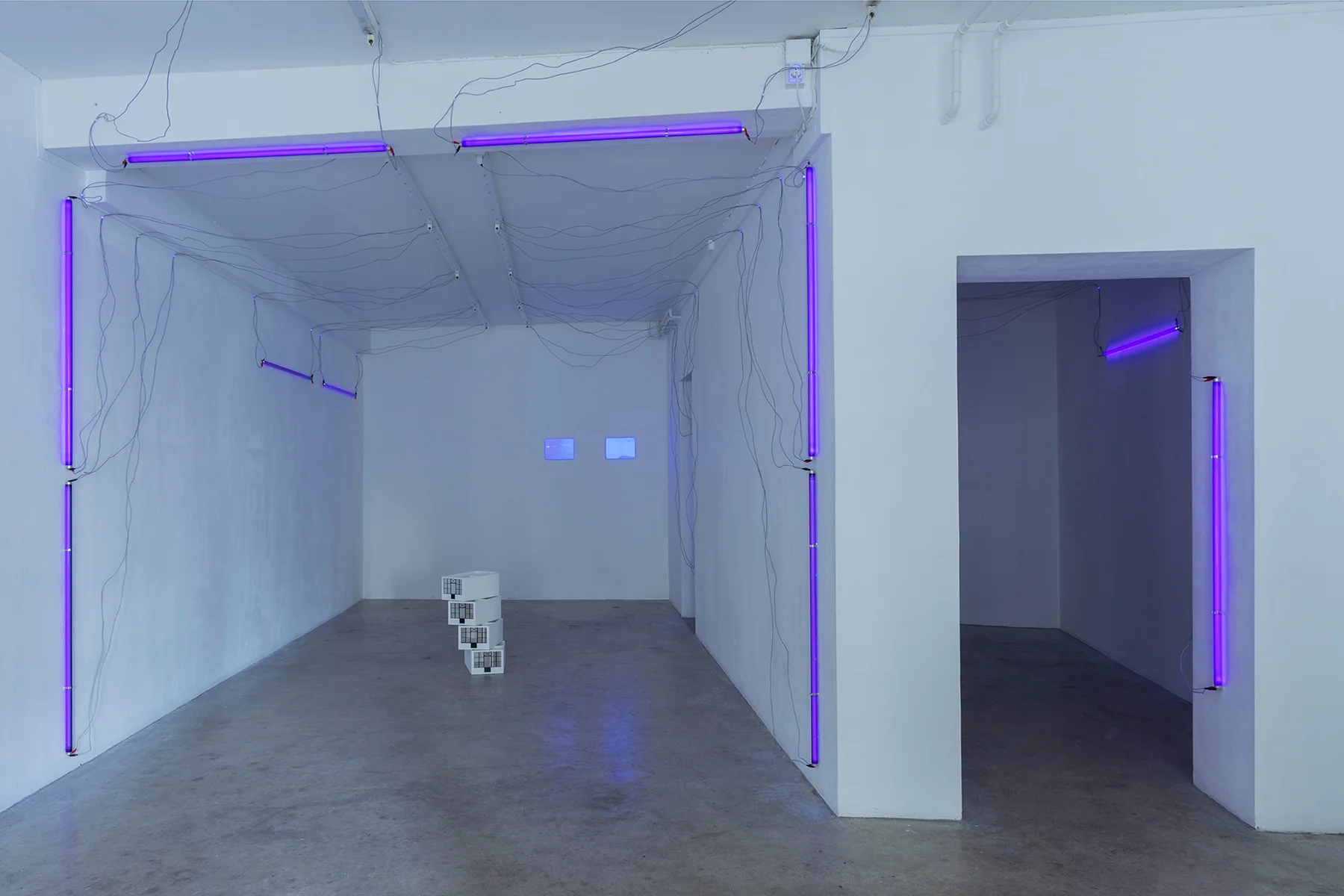
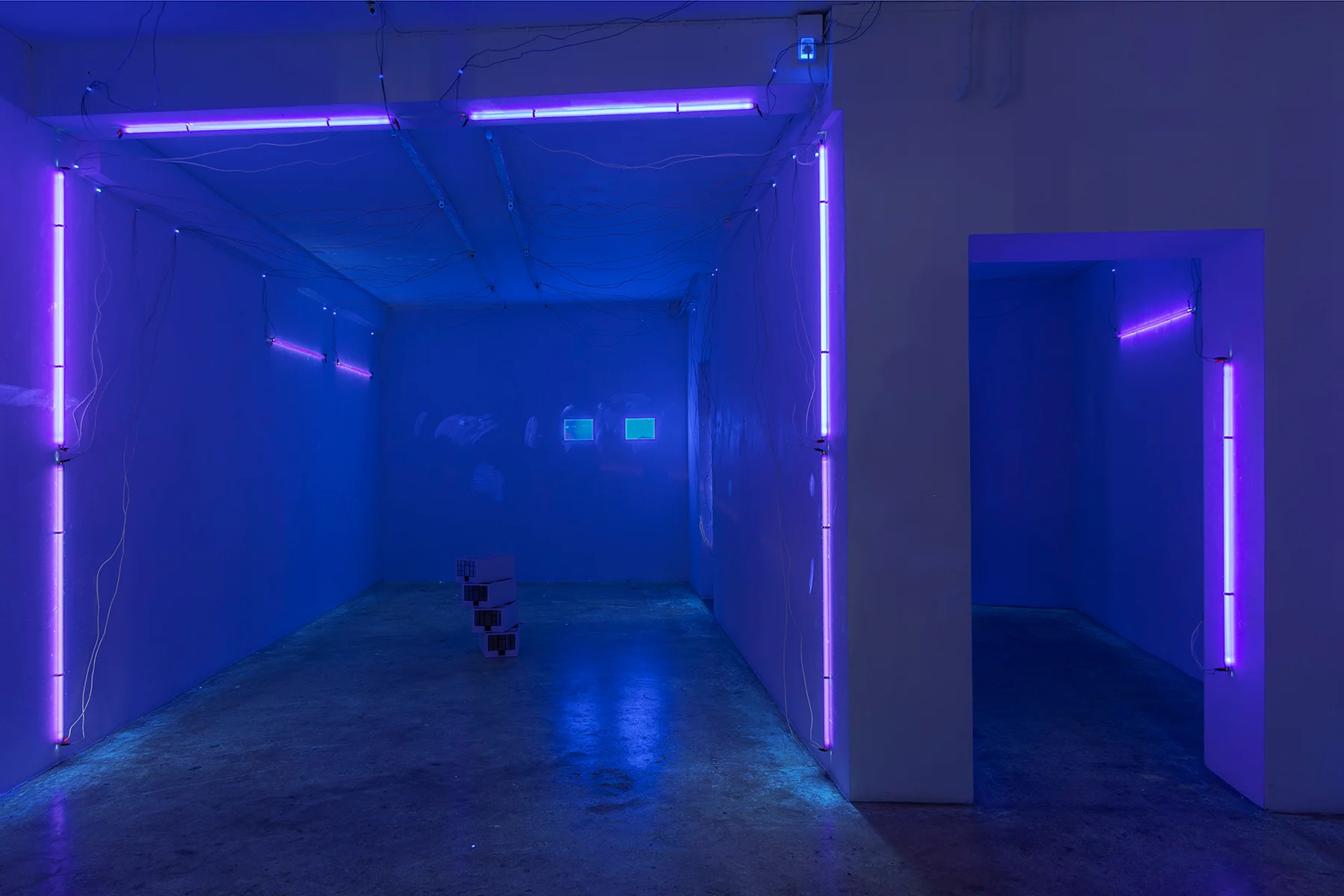
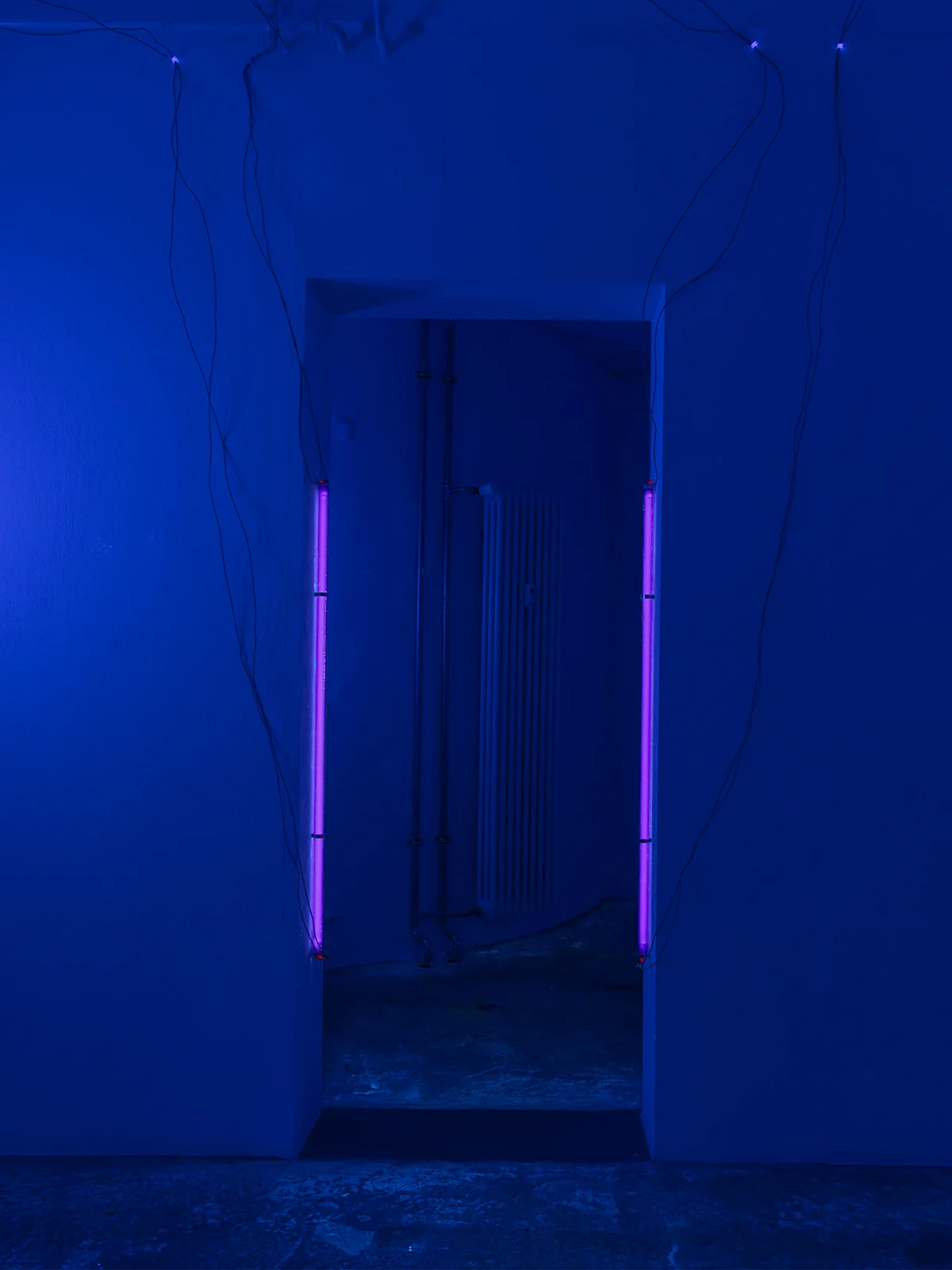
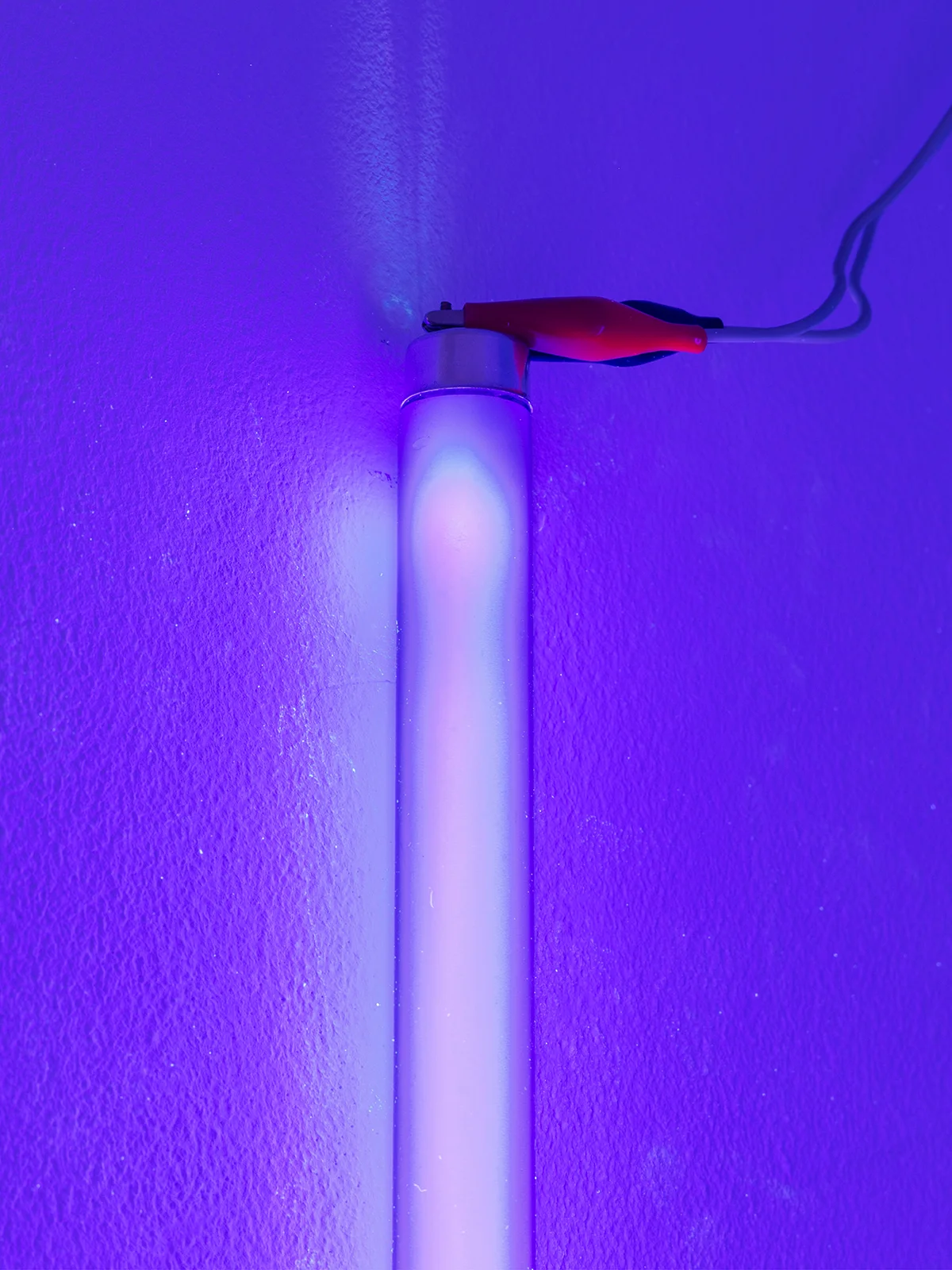
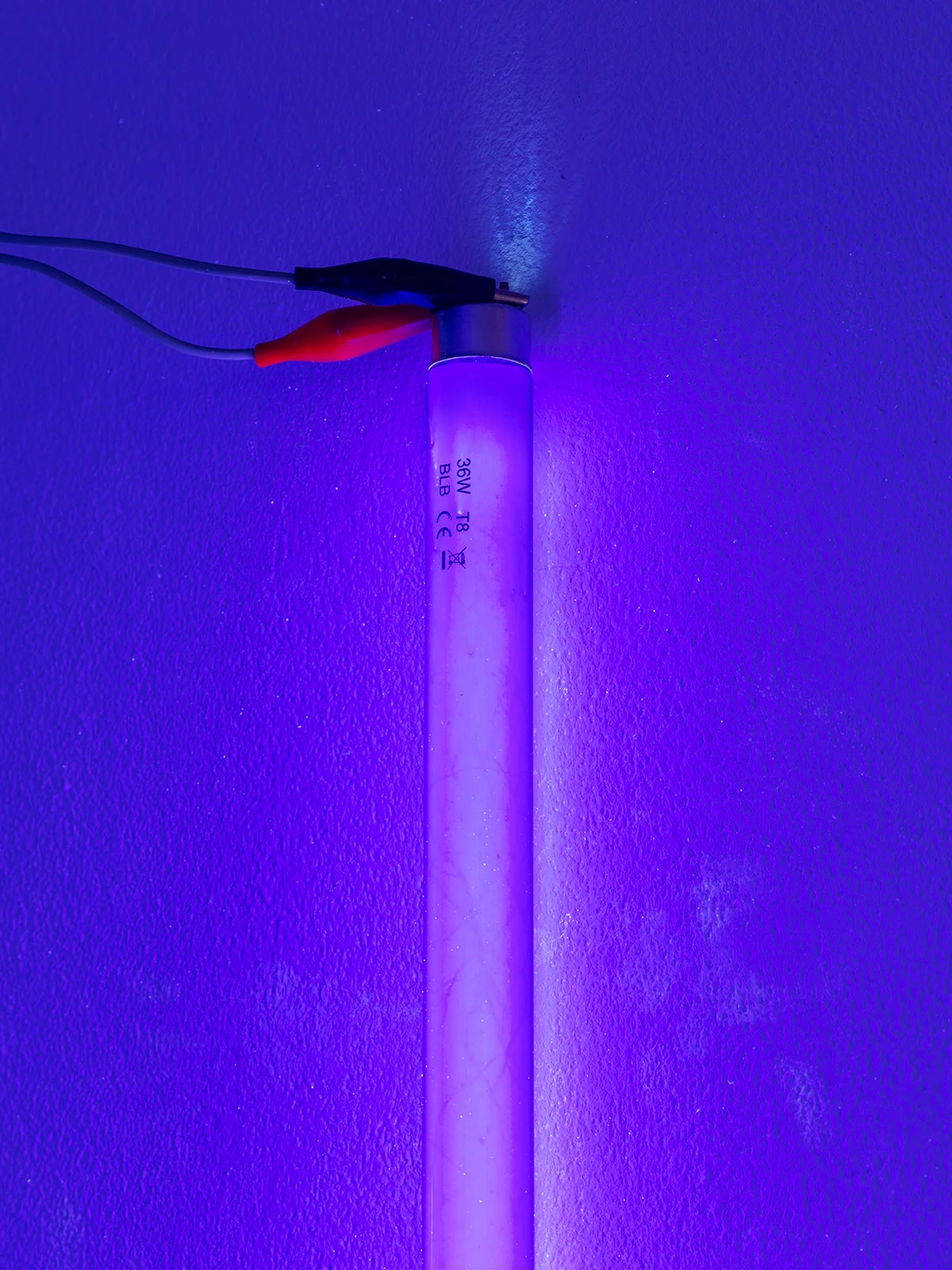
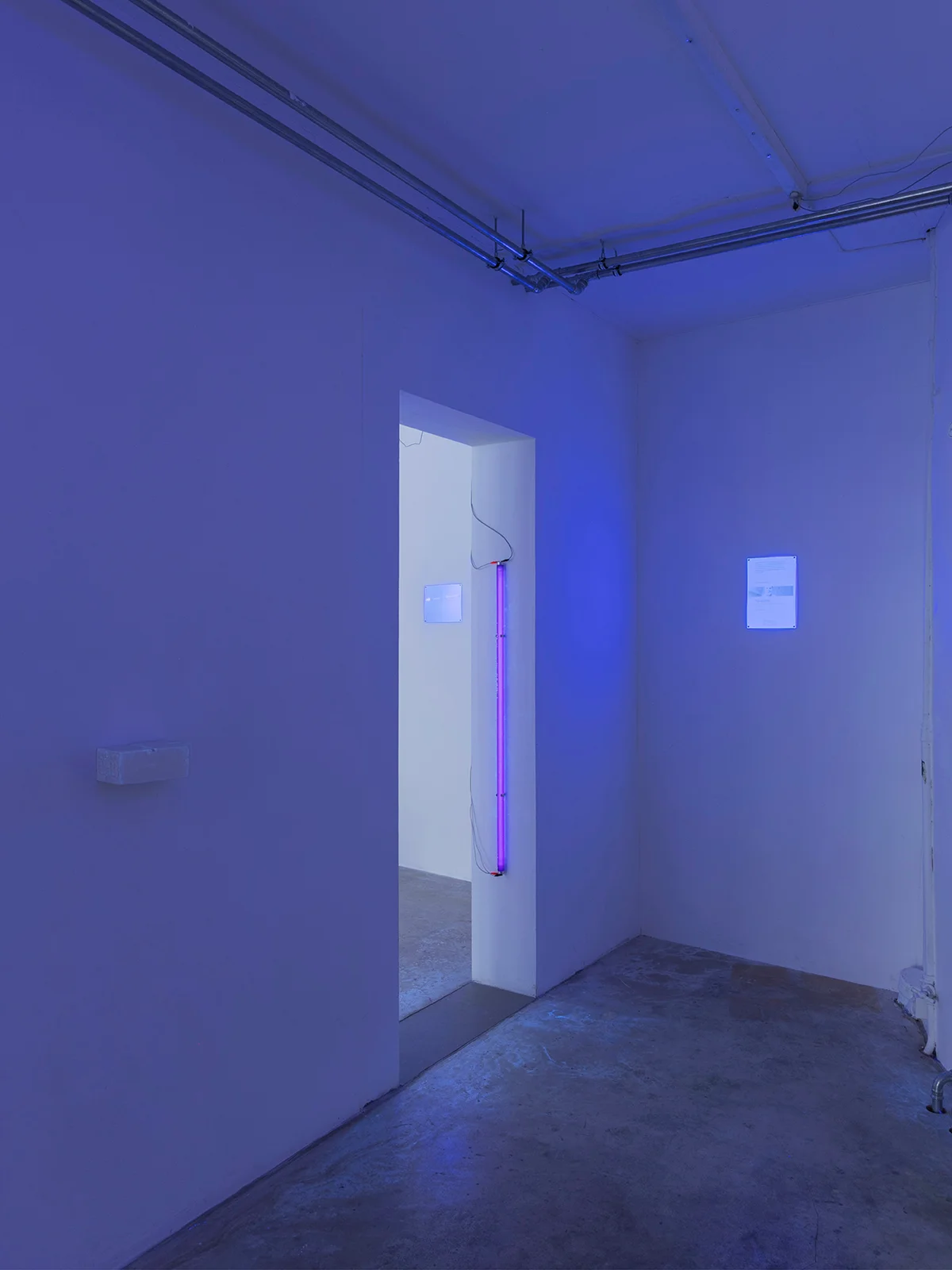
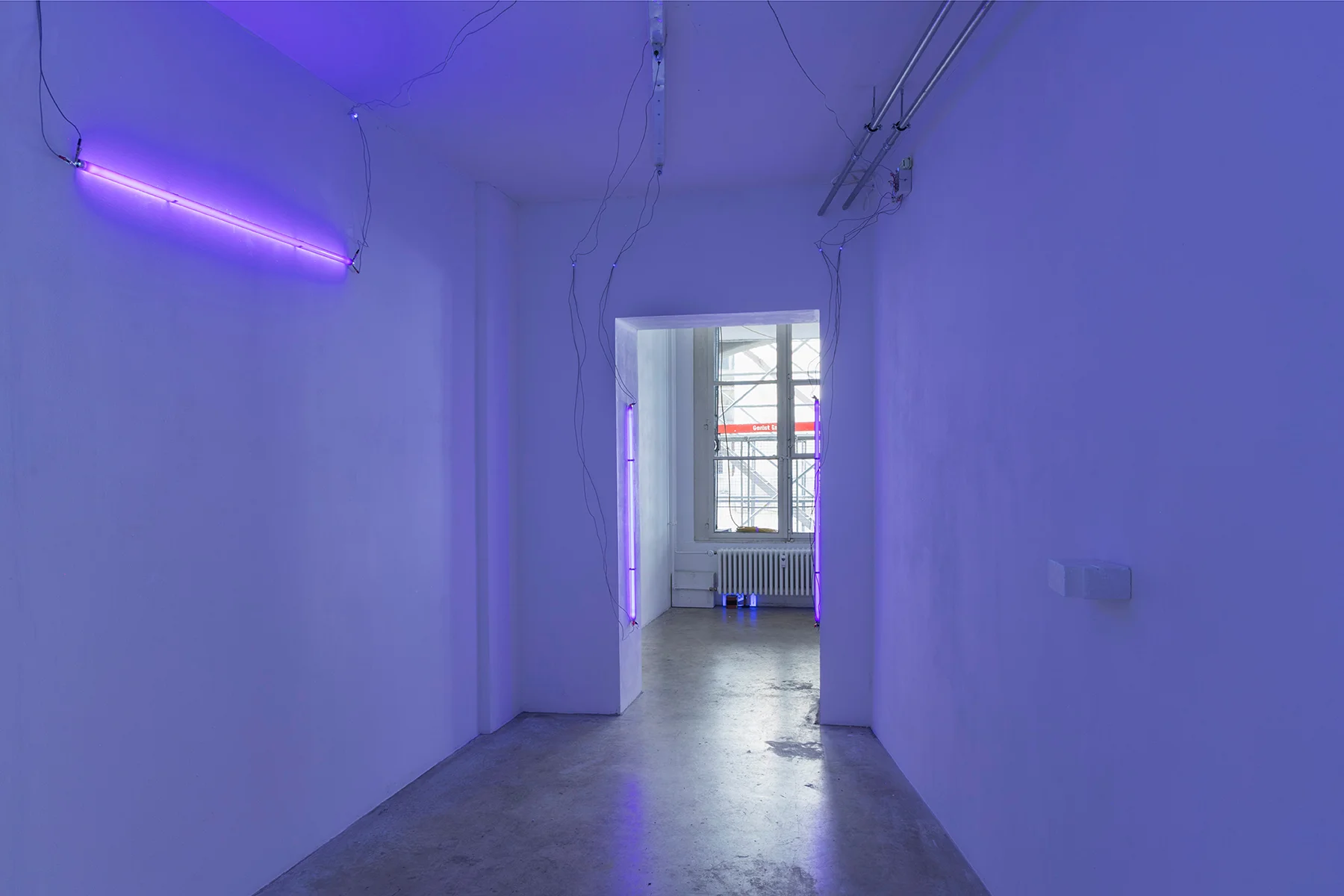
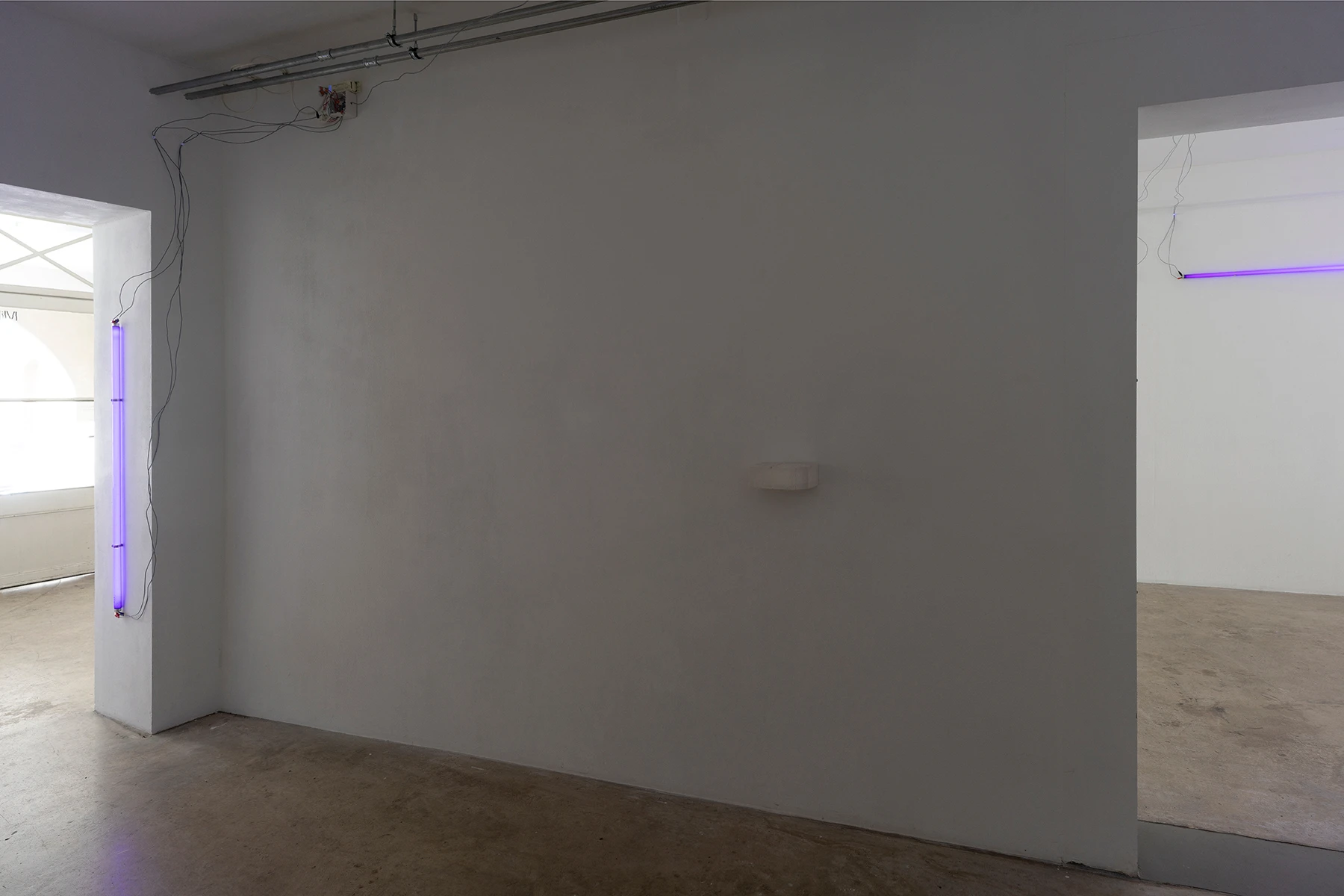
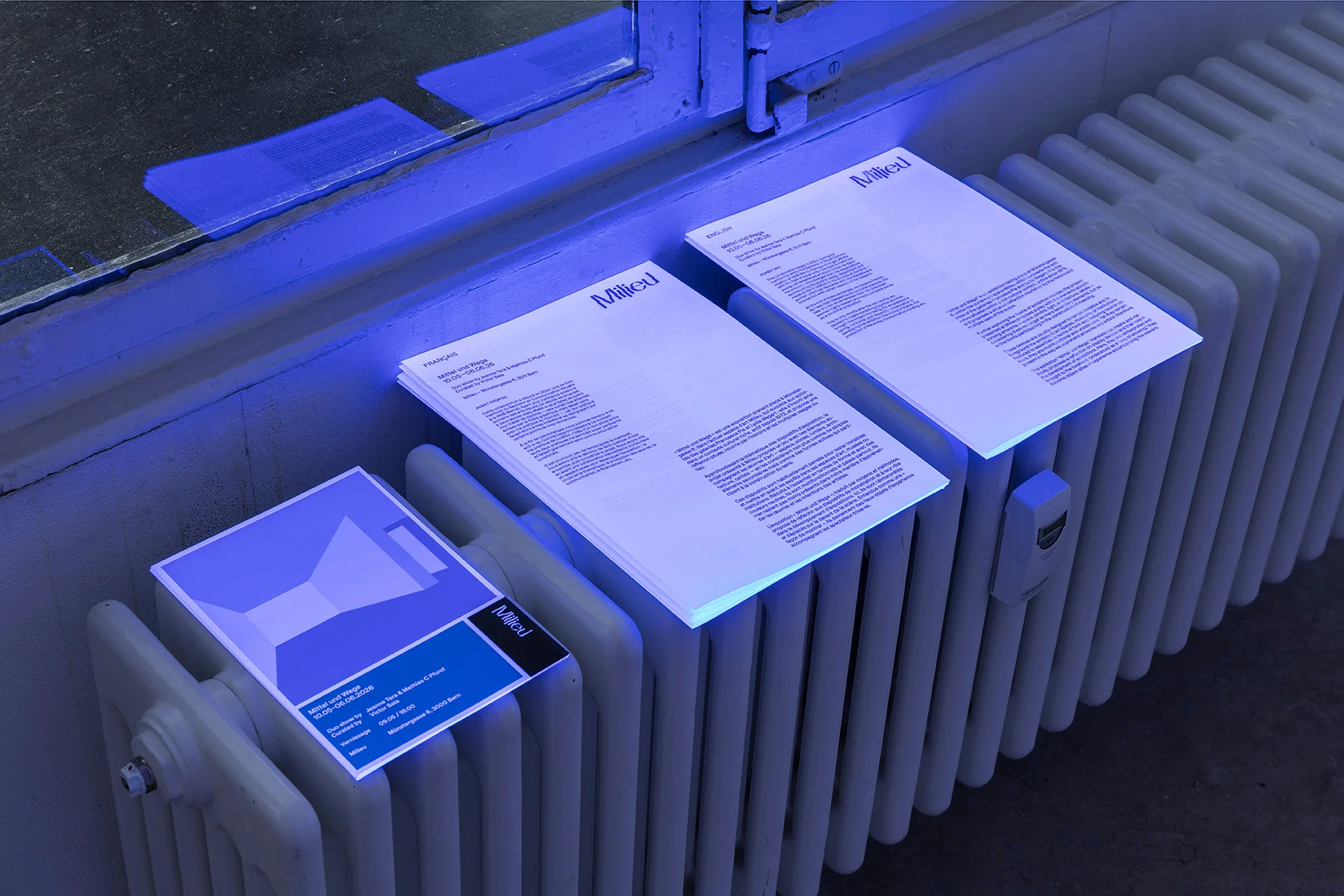
Unica Sede, 2026, Mathias C Pfund 13 Blacklight-Leuchtstoffröhren 36W, Krokodilklemmen, T8-Clips, elektrische Kabel, 3 digitale Weißdrucke auf Lessebo Smooth Bright 300 g/m² Papier DIN A4, Beschriftungsband.
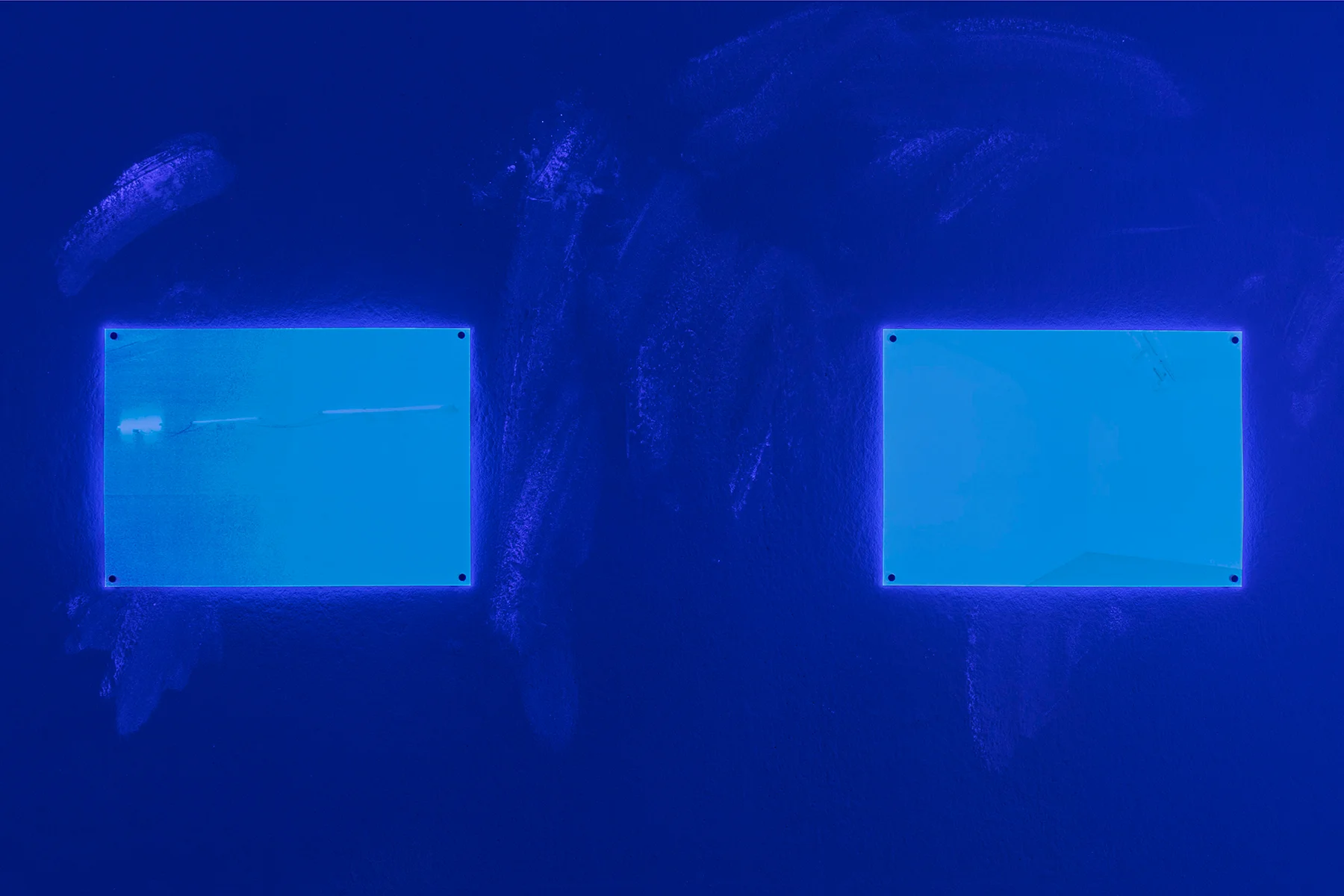
left: Retuschierte fotografische Reproduktion der Gruppenausstellung No Joke im Milieu vom 1. Februar bis 7. März 2020; Lorenza Longhi, Improved Accuracies, 2020 [6 paarweise zusammengeschweißte Leuchtstoffröhren, Argongas, Transformator]. Bildnachweis: Claude Barrault.
right: Retuschierte fotografische Reproduktion der Ausstellung Vesica Piscis von Terry Fox, gezeigt vom 15. Februar bis 5. April 1997; Details der Lichtinstallation.
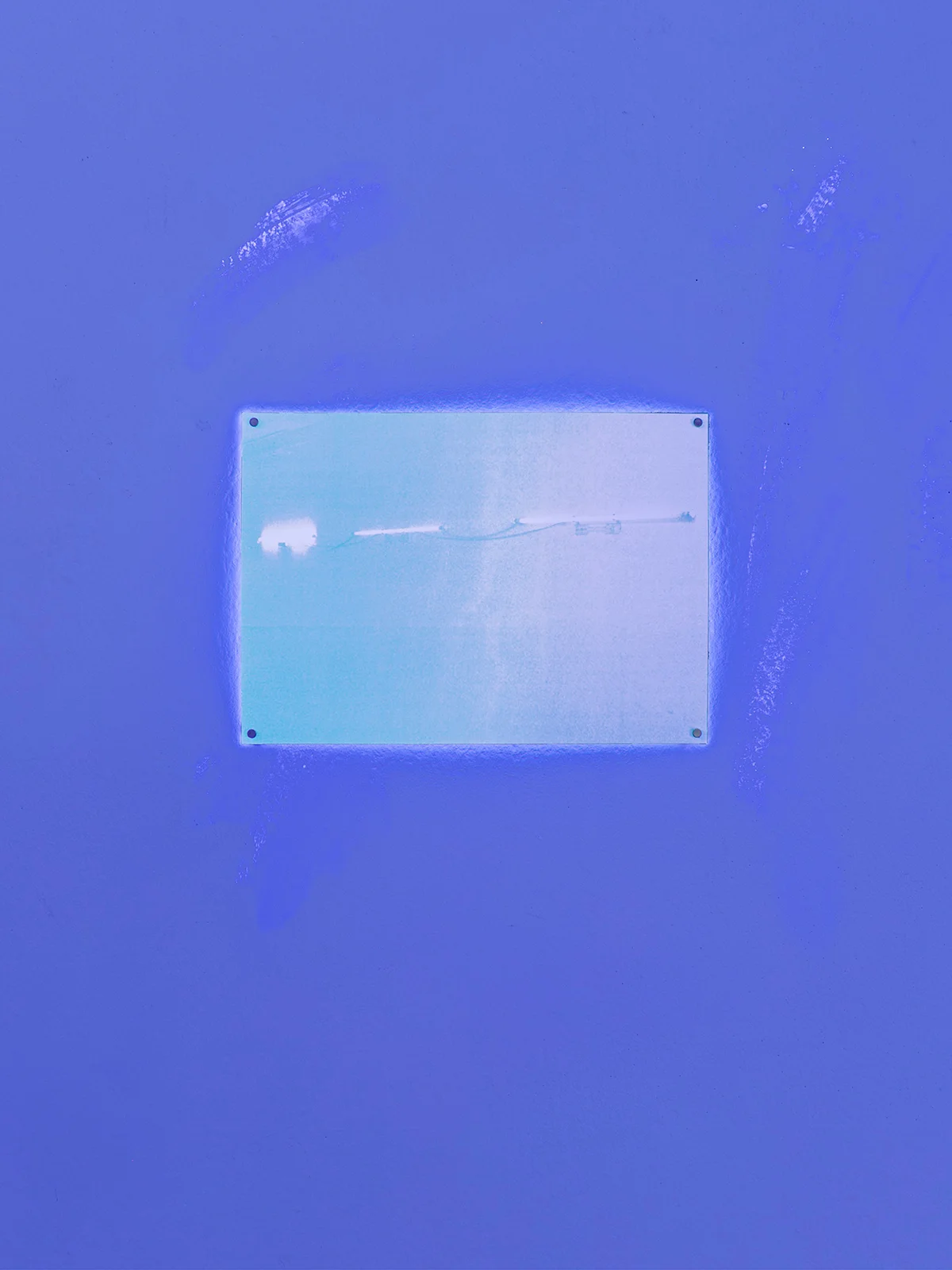
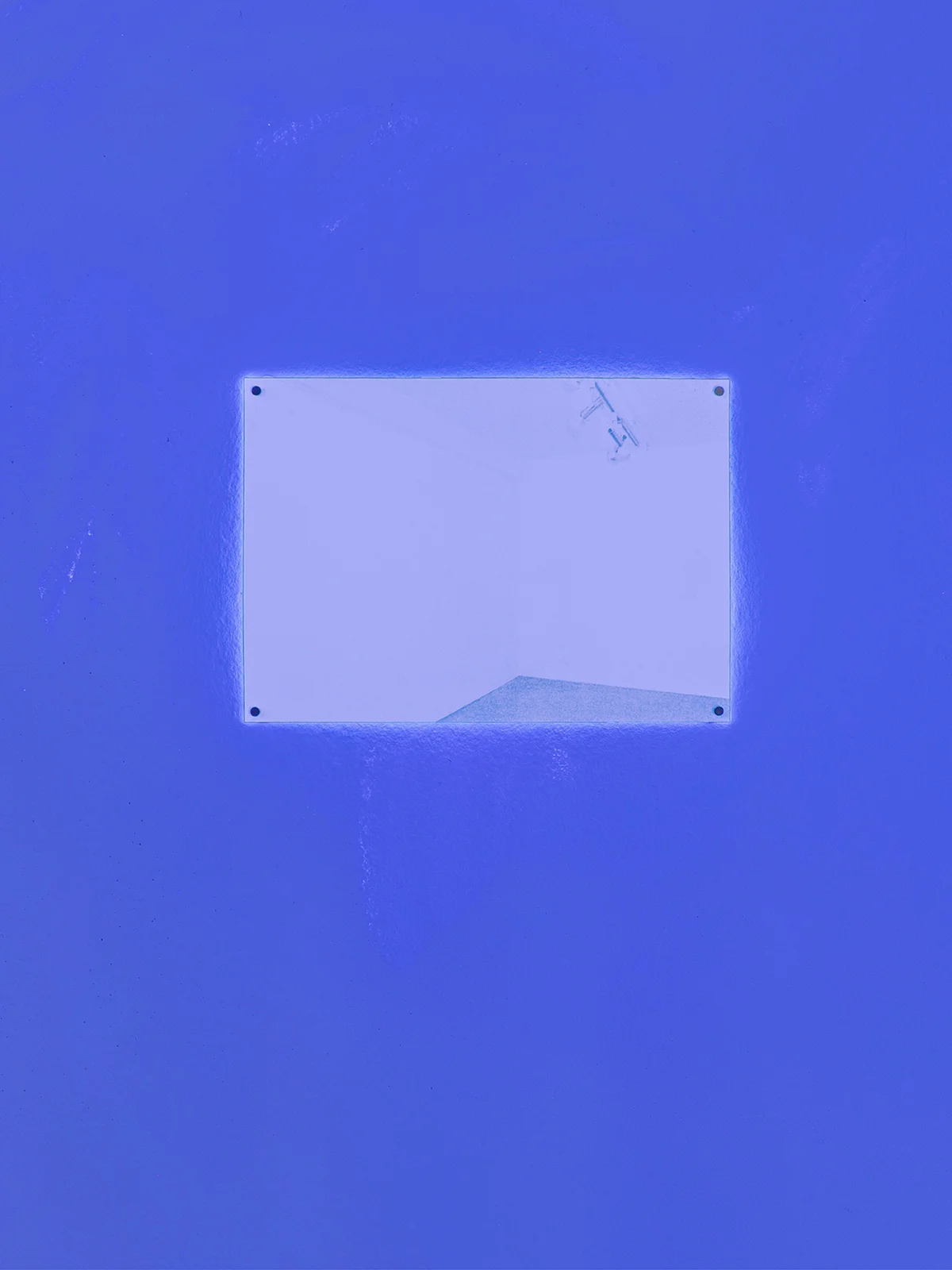
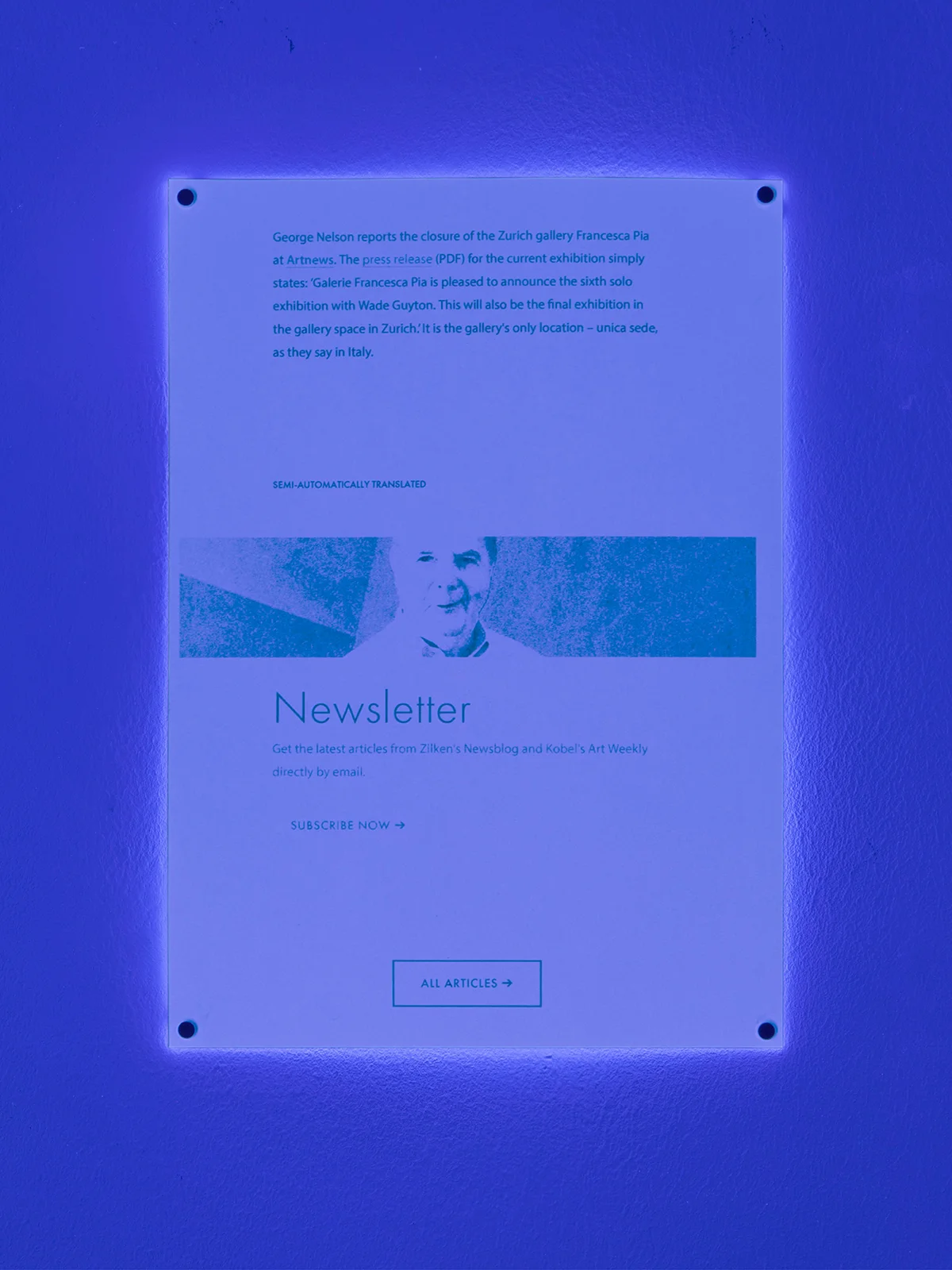
Retuschierter Screenshot von der Website des Versicherungsmaklers Stephen Zilkens; Fragment des Newsletters KOBEL’S ART WEEKLY 44, 2025, verfasst von Stefan Kobel und online veröffentlicht am 27. Oktober 2025.
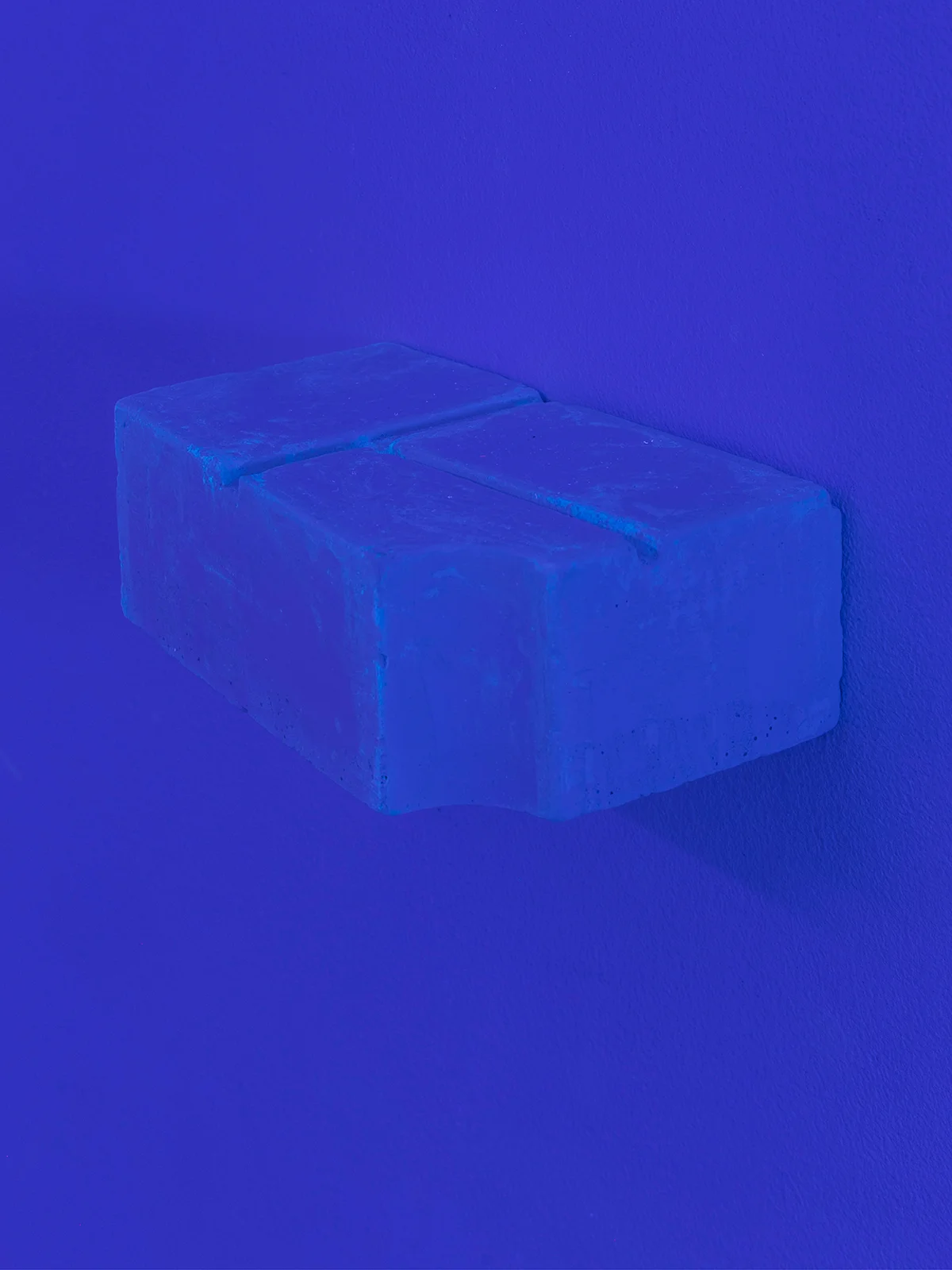
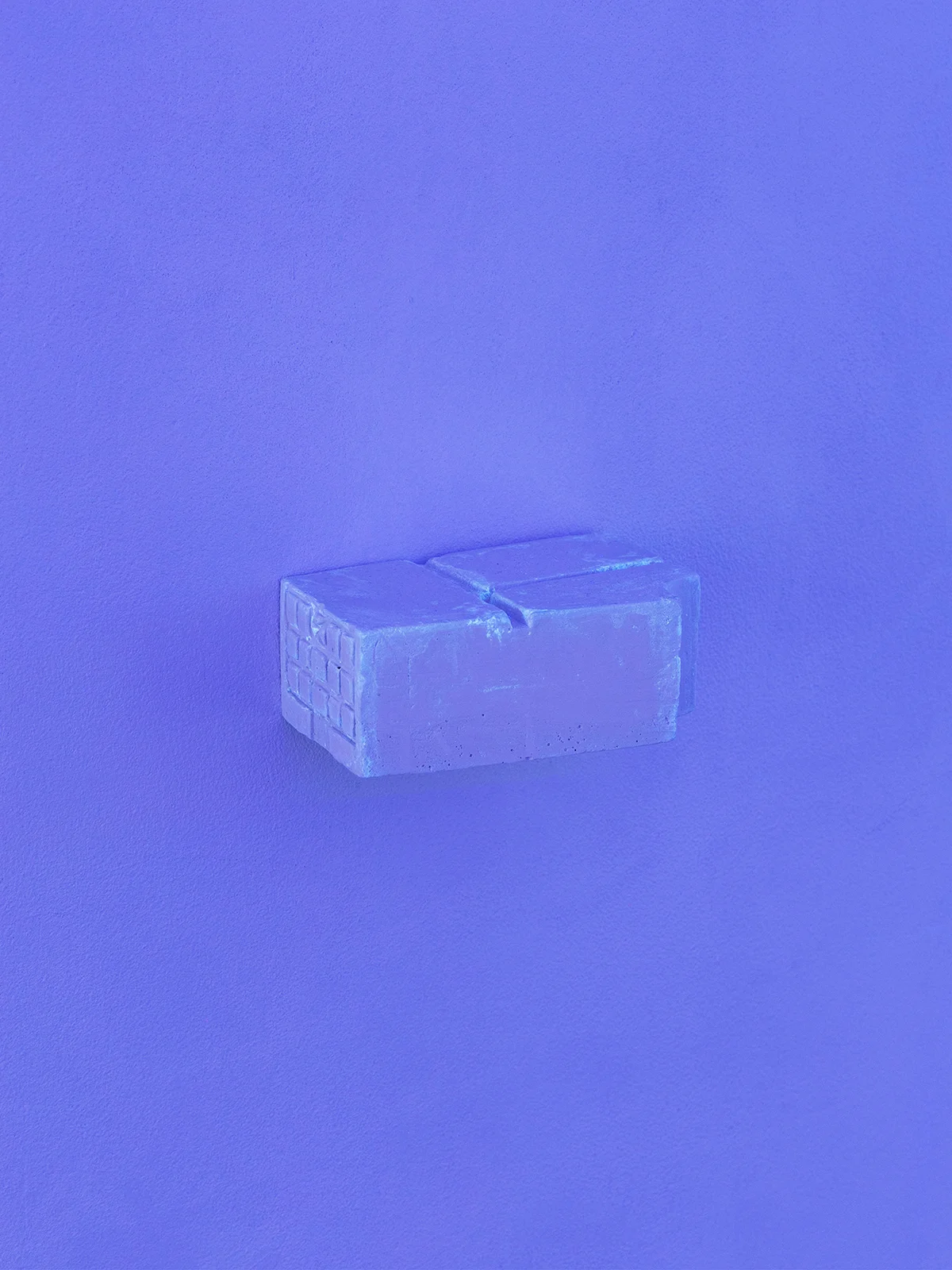
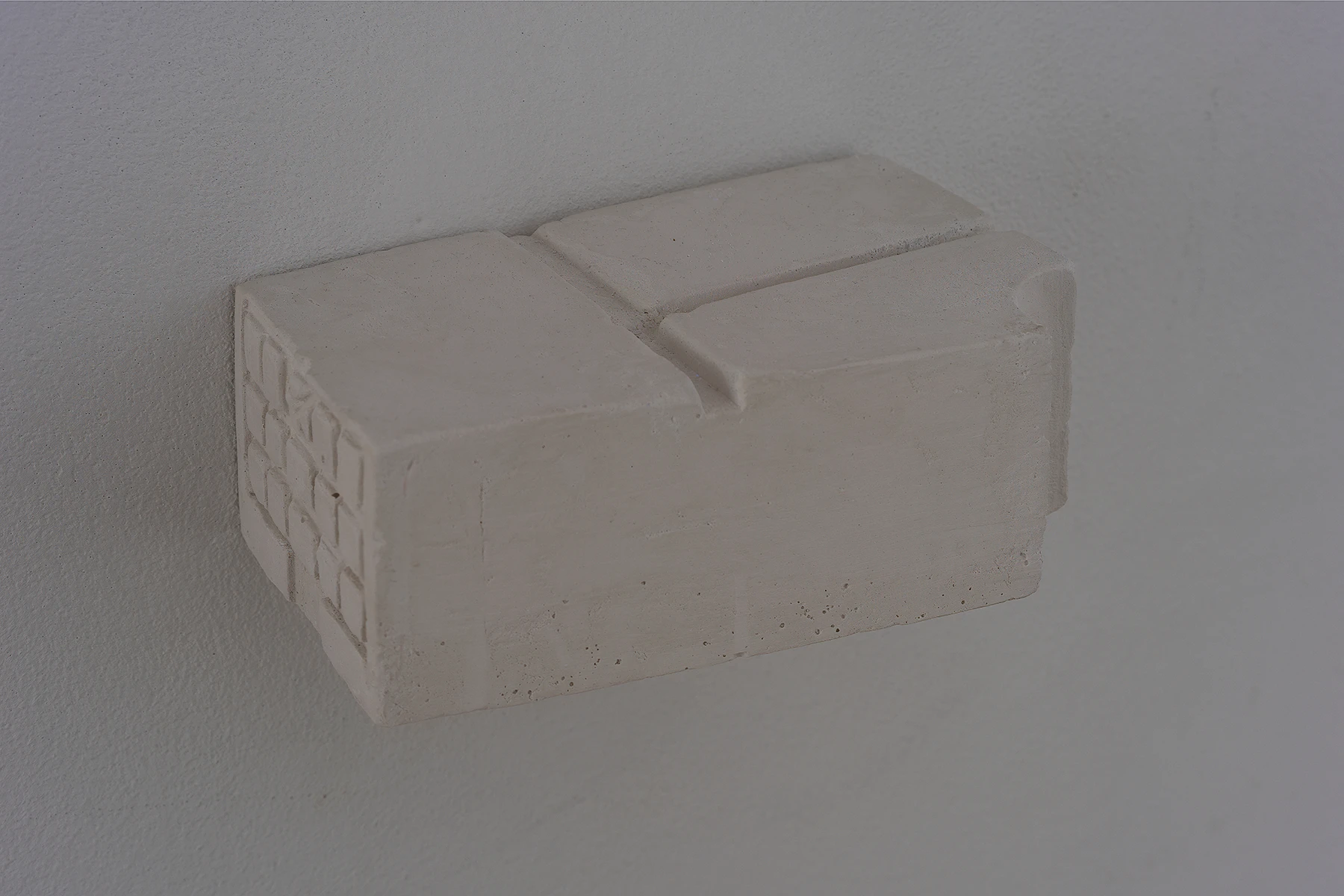
Various views of: Breathing Breezing, 2026, Jeanne Tara, 7 x 13 x 18 cm, Gips
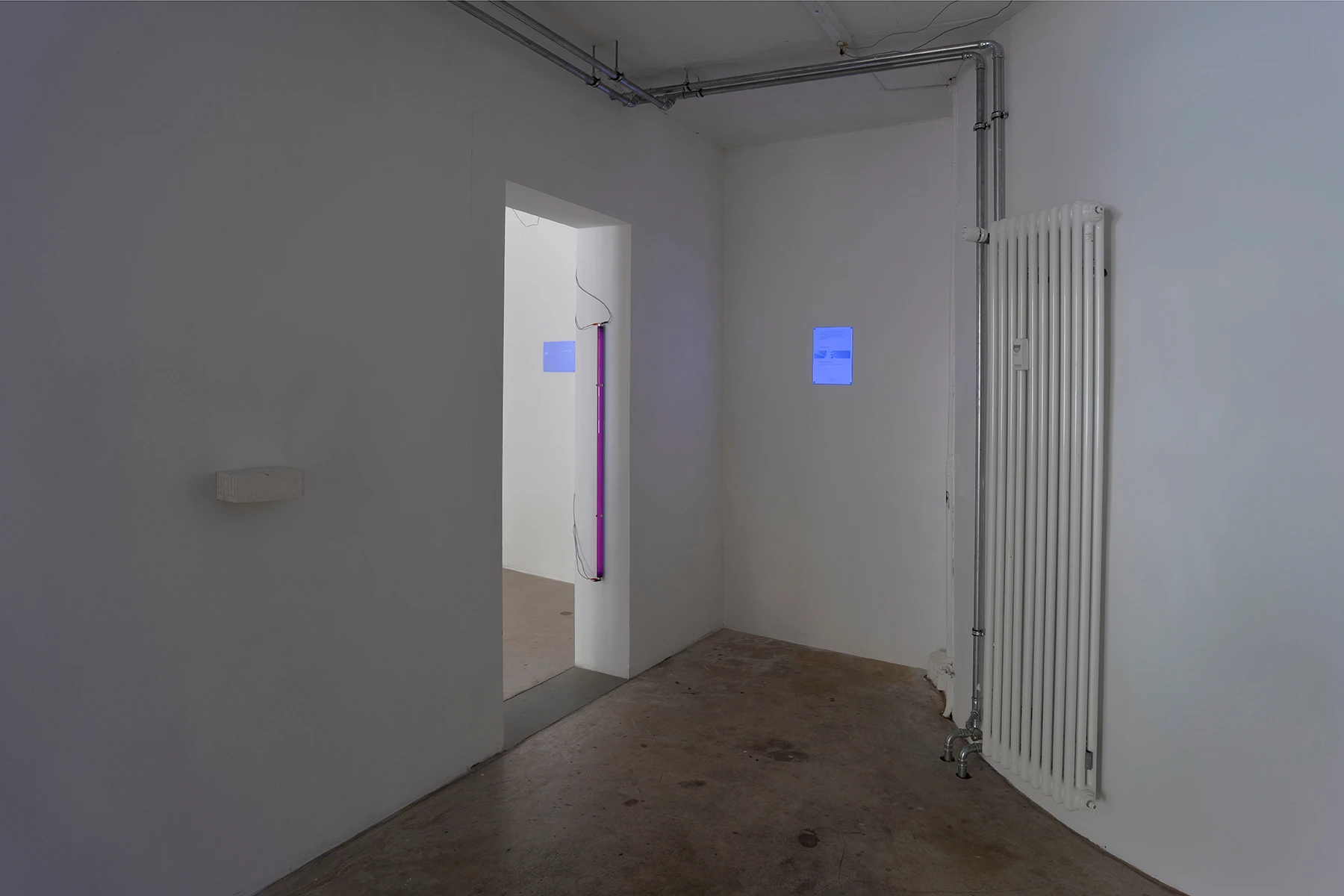
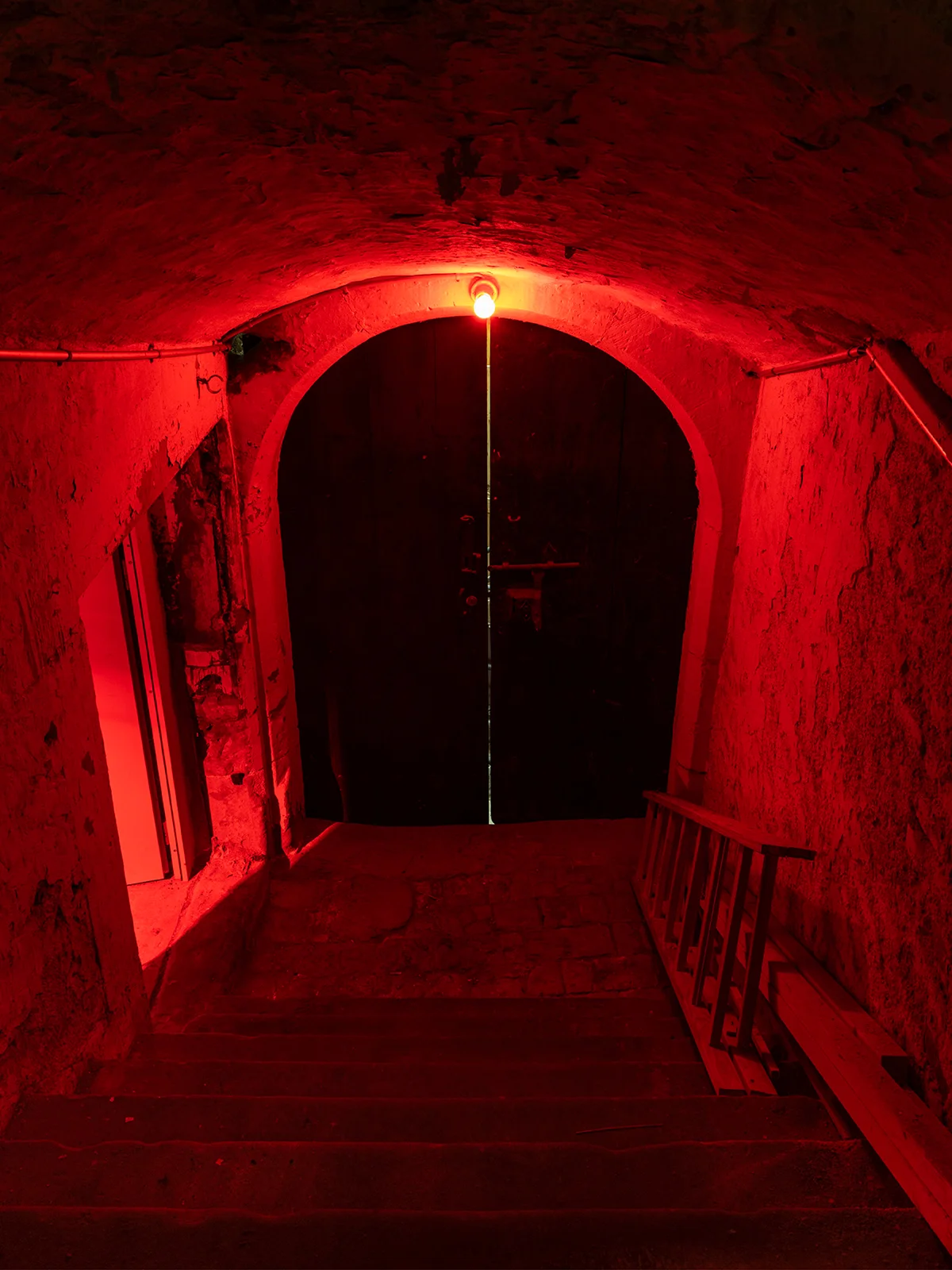
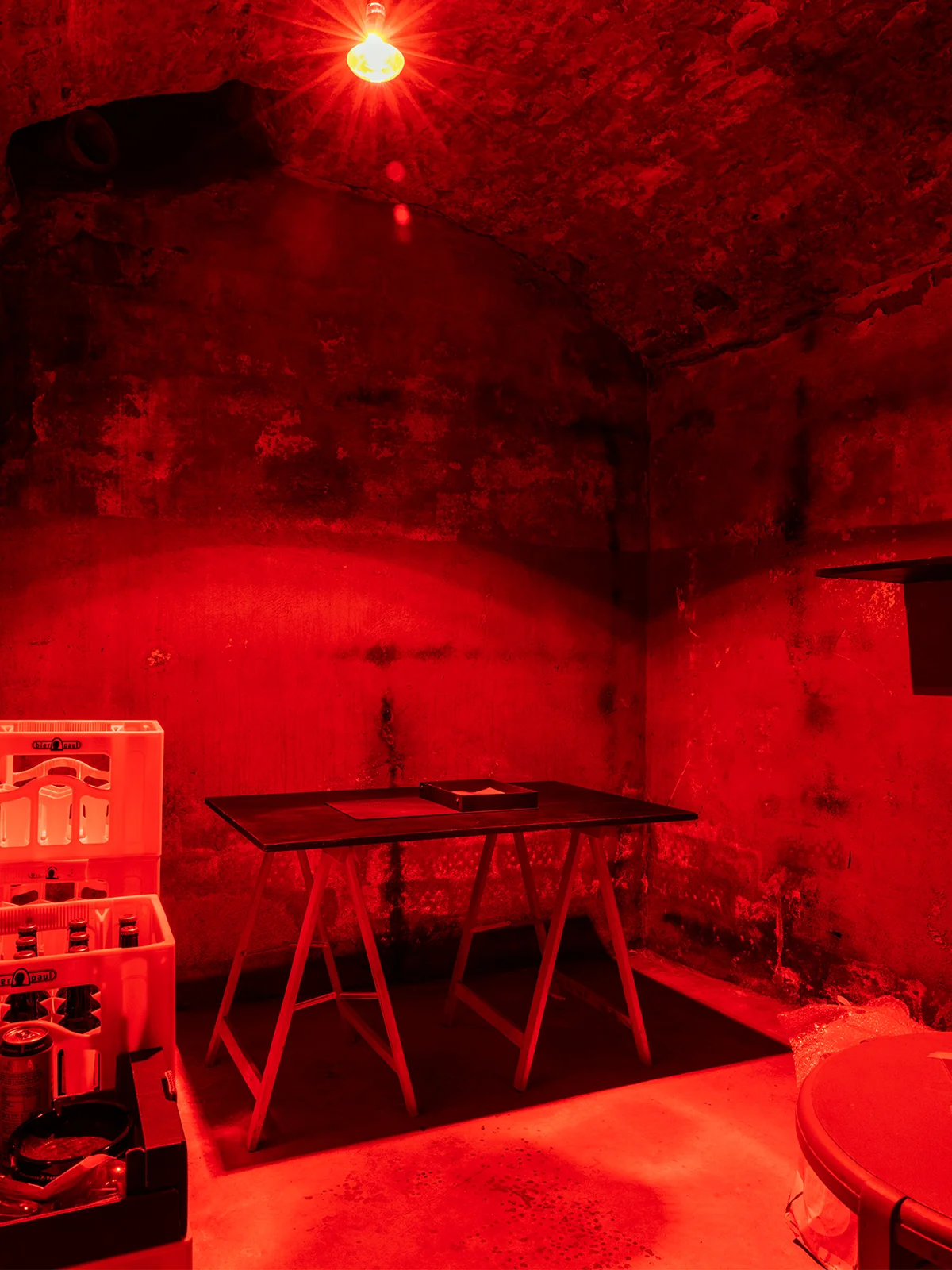
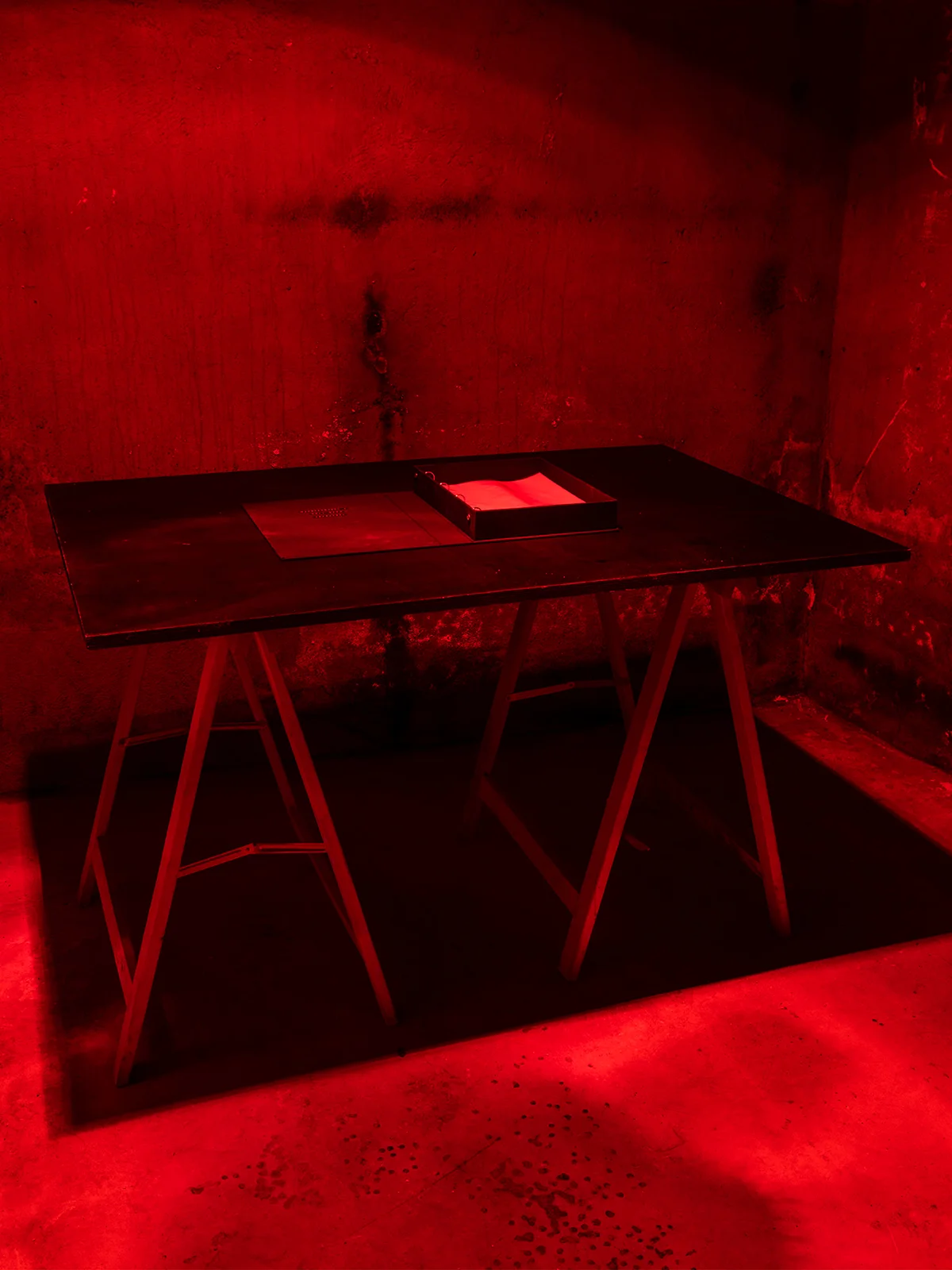
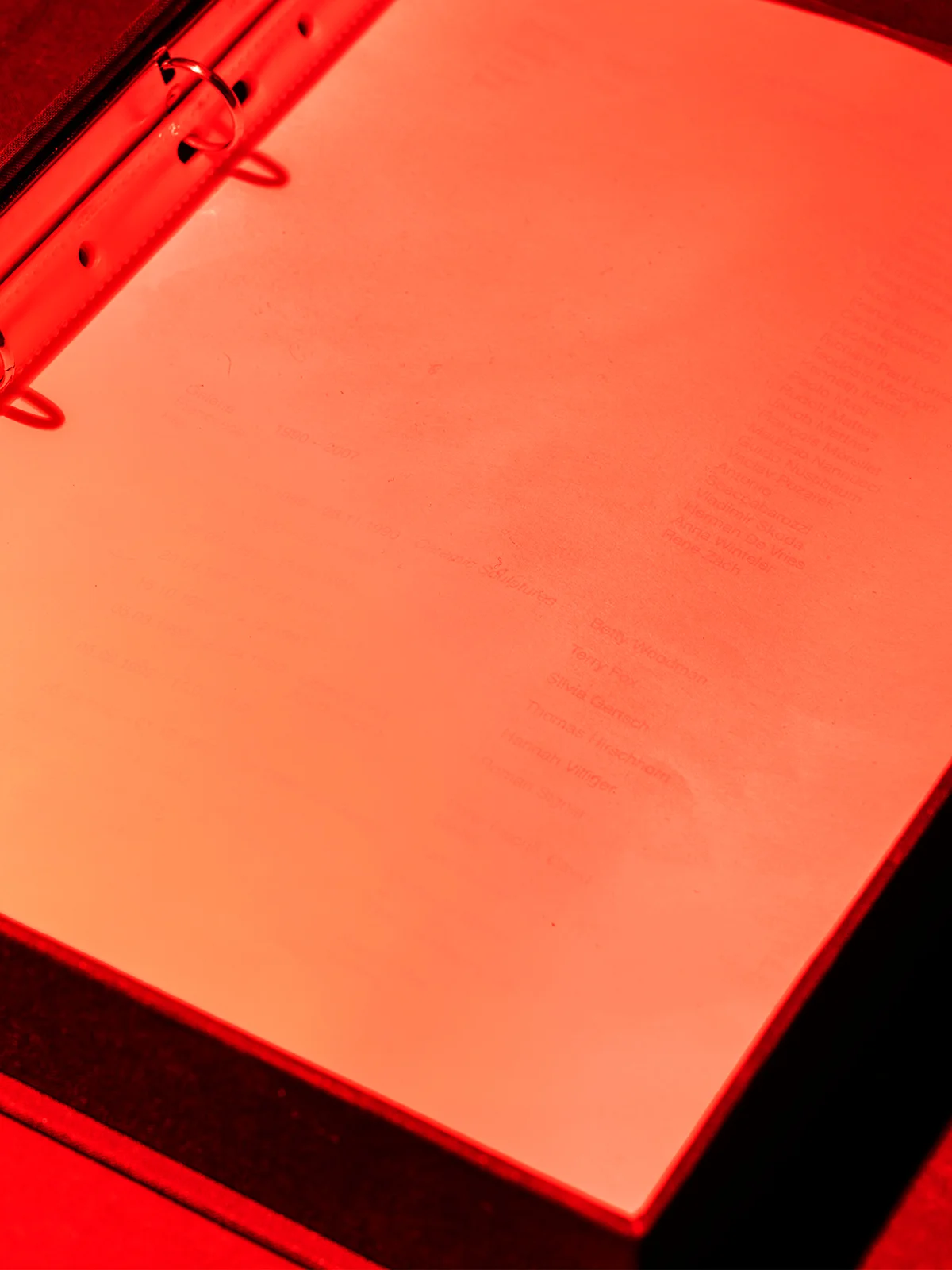
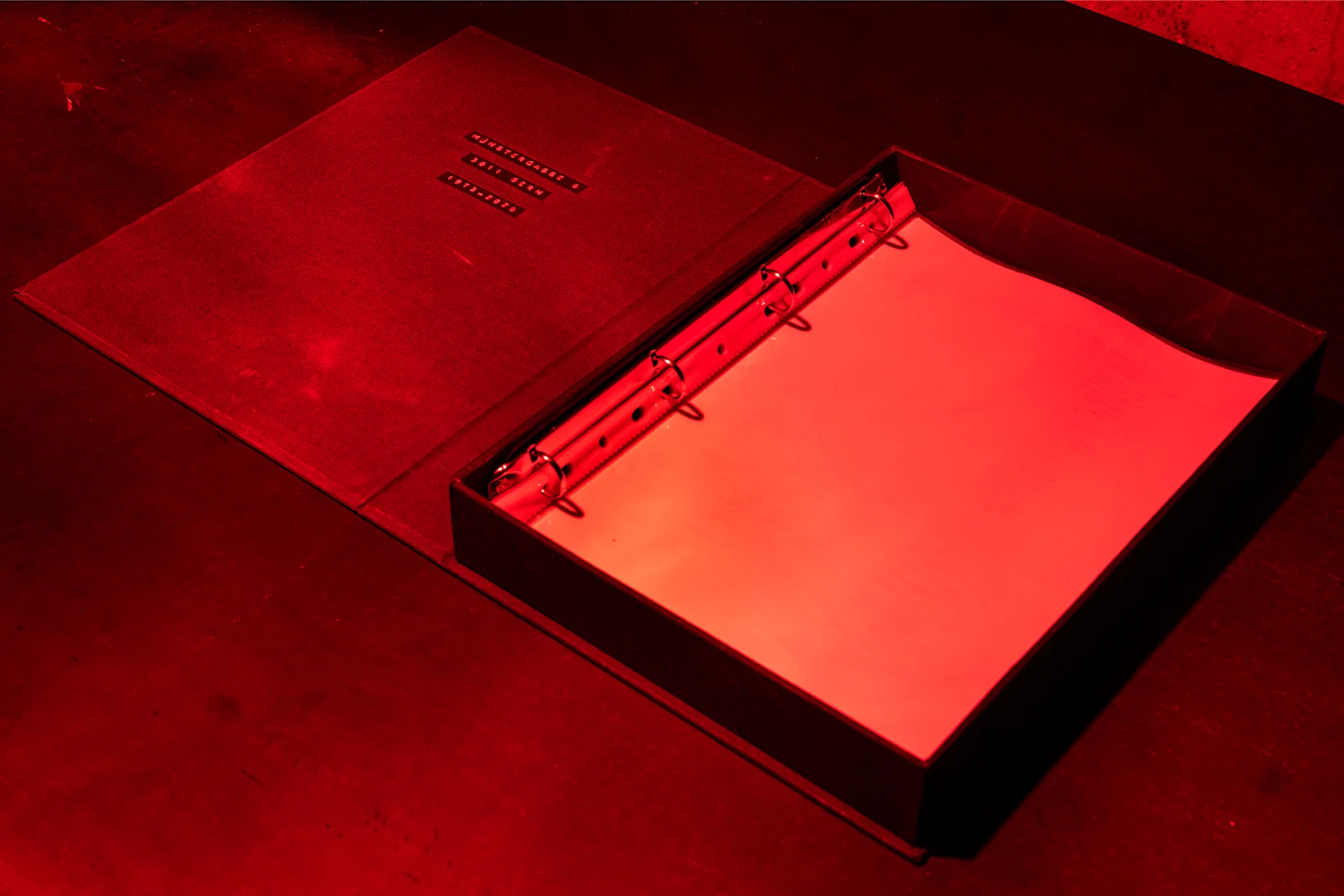
Unica Sede (basement), 2026, Mathias C Pfund, Rote Dunkelkammerlampe, Archivbox, rote Risographie-Drucke auf Papier im DIN-A4-Format, Beschriftungsband.
DE
„Mittel und Wege“ ist eine Ausstellung in der Münstergasse 6 im heutigen Kunstraum Milieu, der die Aktivitäten der Galerien Francesca Pia und Lydia Megert fortführt; sie schreibt sich somit in einen reichen kulturellen Kontext ein, der seit 1973 aktiv ist, und entwickelt eine situierte Reflexion, genährt von der Geschichte und den vielfältigen Nutzungen des Ortes.
In der Vertiefung der Thematik von Ausstellungsdispositiven spielt das im Milieu präsentierte Projekt mit jenen Elementen, die Kunstwerke begleiten — Raum, Sockel, Licht, Architektur, Wandtexte —, indem diese nicht länger als bloß sekundäre Bestandteile verstanden werden, sondern als aktive Formen, die an der Konstruktion von Bedeutung mitwirken.
Diese Dispositive sind gewöhnlich darauf ausgelegt, unsichtbar zu bleiben und die ausgestellten Werke in Kunsträumen, Museen oder Institutionen hervorzuheben. Formal auf das Wesentliche reduziert und in neutralen Farben gehalten, sind sie multifunktional und unauffällig. Dennoch prägen sie unsere Wahrnehmung der Werke und der Intentionen der Künstler*innen.
Die Ausstellung „Mittel und Wege“ versteht sich als Reflexion über Präsentationsdispositive und ihre Rolle in der Entwicklung von Ausstellungen. Hier werden sie neu interpretiert und in den Vordergrund gerückt. Als eine „Art des Zeigens“ verstanden, werden sie zu Objekt-Orten der Erfahrung, die die Betrachter*innen begleiten.
Die künstlerischen Vorschläge materialisieren — oder entmaterialisieren — sich im Raum und betonen dabei die Essenz des Ortes, seine Architektur und seine Geschichte. Sie greifen bestehende Strukturen auf und bilden einen neuen Zustand zwischen Realität und Fiktion.
Die Modell-Objekte werden als narrative Methode eingesetzt und legen den Fokus auf zeitliche und räumliche Aspekte. Gewöhnlich als Reflexionswerkzeuge verwendet — etwa für Zukunftsprojektionen oder Rekonstruktionen der Vergangenheit —, erzeugen sie zugleich eine Mise en abyme der Betrachter*innen im gegenwärtigen Raum. Die vorgeschlagenen Modell-Objekte zielen insbesondere darauf ab, die Aufmerksamkeit auf den Raum zu lenken — die Leere sichtbar zu machen, den Raum zu materialisieren und eine Spur des Ortes zu hinterlassen.
Die Neukonfiguration der Beleuchtung mithilfe der Leuchten von Milieu qualifiziert den Ort neu. Der Einsatz ultravioletter Leuchtstoffröhren lässt Bilder aus der Geschichte des Raumes hervortreten.
Anschließend erweitert sich die Ausstellung auf den Keller — ein Nicht-Ort par excellence, ein Raum des Lagerns, Archivierens und Erinnerns. Diesen Raum dem Publikum zugänglich zu machen, dient dazu, den Ort sprechen zu lassen und unsichtbare Details hervorzuheben. Im Inneren macht ein rotes Licht — das an die Dunkelkammerbeleuchtung fotografischer Labore erinnert — den Inhalt der Dokumente unsichtbar. Auch wenn die Logiken im Vergleich zum Hauptraum umgekehrt sind, bestimmt dasselbe Sichtbarkeitsregime beide Installationen.
Die Ausstellung lädt dazu ein, die Funktionsweisen eines Systems zu beobachten, seine Bestandteile zu analysieren und die Normen sowie die Konsumformen zu hinterfragen, die diese Dispositive hervorrufen. So schlägt die Ausstellung eine In-situ-Erfahrung vor, die mit den Codes zeitgenössischer Präsentation spielt, deren Bedeutung hinterfragt und ihre Rolle in der Begleitung von Kunstwerken spannungsvoll untersucht.
Victor Sala :-)
EN
“Mittel und Wege” is an exhibition taking place at Münstergasse 6, within the current art space Milieu, which succeeds the activities of the galleries Francesca Pia and Lydia Megert; it is therefore situated within a rich cultural context, active since 1973, and proposes a situated reflection nourished by the history and multiple uses of the space.
Further exploring the theme of exhibition devices, the project presented at Milieu proposes a play with the elements accompanying artworks — space, plinths, light, architecture, labels — considering them no longer as mere secondary elements, but as active forms participating in the construction of meaning.
These devices are usually designed to remain invisible and to foreground the exhibits in art spaces, museums, or institutions. Reduced to essentials in terms of form and featuring neutral colours, they are multifunctional and unobtrusive. Yet they remain present in the way we apprehend artworks and artists’ intentions. The exhibition “Mittel und Wege,” translated as means and methods, proposes a reflection on display devices and their role in the development of exhibitions. Here, they are reinterpreted and brought to the forefront. Understood as a “way of showing,” they become object-sites of experience accompanying the viewers.
The artistic propositions materialize — or dematerialize — within the space, highlighting the essence of the site, its architecture, and its history. They reuse pre-existing structures and constitute a new state between reality and fiction.
The model-objects are reused as a narrative method, emphasizing temporal and spatial aspects. Commonly used as tools for reflection, such as future projections or reconstructions of the past, they also propose a mise en abyme of the viewer within the space in the present moment. The proposition of these model-objects notably seeks to draw attention to the space — to show emptiness, to materialize space, and to offer an imprint of the site.
The reconfiguration of the lighting using Milieu’s luminaires requalifies the space. The use of ultraviolet fluorescent tubes brings forth images drawn from the history of the venue.
Then, the exhibition extends into the basement, a non-place by default, a space of storage, archiving, and memory. Opening this space to the public tends to make the site speak and to highlight invisible details. Inside, a red light — evoking the safelights of photographic darkrooms — renders the content of the documents invisible here. Although the logics are inverted in comparison with those of the main room, the same regime of visibility governs both installations.
The exhibition invites viewers to observe the workings of a system, analyze its components, and question the norms and modes of consumption induced by these devices. The exhibition thus proposes an in-situ experience that plays with the codes of contemporary display, interrogates their meaning, and places their role in accompanying artworks under tension.
Victor Sala :-)
FR
« Mittel und Wege » est une exposition prenant place à Münstergasse 6, dans l’actuel espace d’art Milieu, qui succède aux activités des galeries Francesca Pia et Lydia Megert ; elle s’inscrit ainsi dans un contexte culturel riche, actif depuis 1973, et propose une réflexion située, nourrie par l’histoire et les multiples usages du lieu.
Approfondissant la thématique des dispositifs d’exposition, le projet présenté à Milieu propose un jeu avec ces éléments accompagnant les oeuvres d’art — espace, socles, lumière, architecture, cartels — en les considérant non plus comme de simples éléments secondaires mais comme des formes actives qui participent à la construction du sens.
Ces dispositifs sont habituellement pensés pour rester invisibles et mettre en avant les expôts dans les espaces d’art, musées ou institutions. Réduits à l’essentiel en termes de forme et avec des couleurs neutres, ils sont multifonctionnels et passe-partout. Ils n’en restent pas moins présents dans notre manière d’appréhender les oeuvres et les intentions des artistes.
L’exposition « Mittel und Wege », traduit par moyens et méthodes, propose de réfléchir aux dispositifs de monstration et à leur rôle dans le développement d’expositions. Ici, ils sont réinterprétés et déplacés sur le devant de la scène. Entendus comme une « façon de montrer », ils deviennent des lieux-objets d’expérience accompagnant les spectateur-trice-xs.
Les propositions artistiques se matérialisent — ou se dématérialisent — dans l’espace valorisant l’essence du lieu, son architecture et son histoire. Elles reprennent les structures pré-existantes et constituent un nouvel état entre réalité et fiction.
Les objets-maquettes sont repris comme méthode narrative, mettant l’accent sur des aspects temporels et spatiaux. Utilisés communément comme des outils de réflexion, tels que des projections futures ou des reconstitutions passées, ils proposent aussi une mise en abyme du spectateur-trice-xs dans l’espace au moment présent. La proposition des objets-maquettes tend notamment à attirer l’attention sur l’espace — à montrer le vide, à matérialiser l’espace et à offrir une empreinte du lieu.
La reconfiguration de l’éclairage à partir des luminaires de Milieu requalifie le lieu. L’usage de tubes fluorescents Ultraviolets fait émerger des images issues de l’histoire de l’espace.
Puis, l’exposition s’étend à la cave, non-lieu par défaut, espace de stockage, d’archivage et endroit de mémoire. Proposer cet espace au public tend à faire parler le lieu et à valoriser des détails invisibles. À l’intérieur, une lumière rouge – évoquant les lumières inactiniques des laboratoires photographiques — rend ici invisible le contenu des documents. Si les logiques sont inversées par rapport à celles de la salle principale, le même régime de visibilité régit les deux installations.
L’exposition invite à observer les fonctionnements d’un système, analyser ses composantes et questionner les normes et les modes de consommation que ces dispositifs induisent. L’exposition propose ainsi une expérience in-situ qui joue avec les codes de monstration contemporains, interroge leur sens et met en tension leur rôle dans l’accompagnement d’oeuvres d’art.
Victor Sala :-)
Mit freundlicher Unterstützung von/Kindly supported by:
Pro Helvetia | Kultur Stadt Bern | Swisslos Lotteriefonds Kanton Bern | Burgergemeinde Bern | Temperatio | GVB Kulturstiftung
Back to top
10.05.–06.06.2026
Duo Show by Jeanne Tara & Mathias C Pfund
Curated by Victor Sala


left: If walls had ears, 2026, Jeanne Tara, 160 x 120 x 0.5 cm, Latex

Milieux, 2026, Jeanne Tara, 62 x 40 x 60 cm Holz, Plexiglas

Unica Sede, 2026, Mathias C Pfund 13 Blacklight-Leuchtstoffröhren 36W, Krokodilklemmen, T8-Clips, elektrische Kabel, 3 digitale Weißdrucke auf Lessebo Smooth Bright 300 g/m² Papier DIN A4, Beschriftungsband.


left: Retuschierte fotografische Reproduktion der Gruppenausstellung No Joke im Milieu vom 1. Februar bis 7. März 2020; Lorenza Longhi, Improved Accuracies, 2020 [6 paarweise zusammengeschweißte Leuchtstoffröhren, Argongas, Transformator]. Bildnachweis: Claude Barrault.
right: Retuschierte fotografische Reproduktion der Ausstellung Vesica Piscis von Terry Fox, gezeigt vom 15. Februar bis 5. April 1997; Details der Lichtinstallation.


Retuschierter Screenshot von der Website des Versicherungsmaklers Stephen Zilkens; Fragment des Newsletters KOBEL’S ART WEEKLY 44, 2025, verfasst von Stefan Kobel und online veröffentlicht am 27. Oktober 2025.


Various views of: Breathing Breezing, 2026, Jeanne Tara, 7 x 13 x 18 cm, Gips
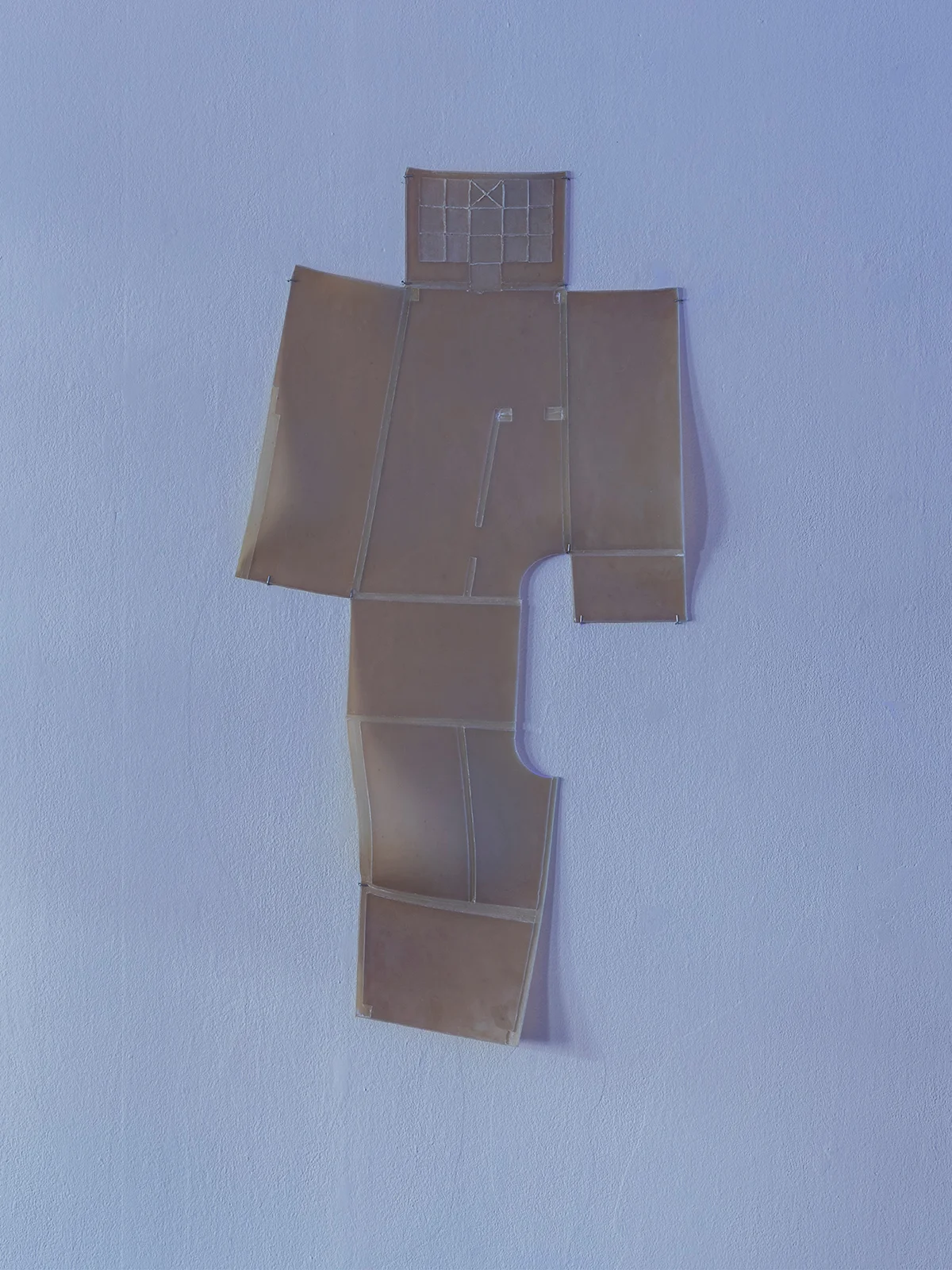


If walls had ears, 2026, Jeanne Tara, 160 x 120 x 0.5 cm, Latex


Unica Sede (basement), 2026, Mathias C Pfund, Rote Dunkelkammerlampe, Archivbox, rote Risographie-Drucke auf Papier im DIN-A4-Format, Beschriftungsband.
DE
„Mittel und Wege“ ist eine Ausstellung in der Münstergasse 6 im heutigen Kunstraum Milieu, der die Aktivitäten der Galerien Francesca Pia und Lydia Megert fortführt; sie schreibt sich somit in einen reichen kulturellen Kontext ein, der seit 1973 aktiv ist, und entwickelt eine situierte Reflexion, genährt von der Geschichte und den vielfältigen Nutzungen des Ortes.
In der Vertiefung der Thematik von Ausstellungsdispositiven spielt das im Milieu präsentierte Projekt mit jenen Elementen, die Kunstwerke begleiten — Raum, Sockel, Licht, Architektur, Wandtexte —, indem diese nicht länger als bloß sekundäre Bestandteile verstanden werden, sondern als aktive Formen, die an der Konstruktion von Bedeutung mitwirken.
Diese Dispositive sind gewöhnlich darauf ausgelegt, unsichtbar zu bleiben und die ausgestellten Werke in Kunsträumen, Museen oder Institutionen hervorzuheben. Formal auf das Wesentliche reduziert und in neutralen Farben gehalten, sind sie multifunktional und unauffällig. Dennoch prägen sie unsere Wahrnehmung der Werke und der Intentionen der Künstler*innen.
Die Ausstellung „Mittel und Wege“ versteht sich als Reflexion über Präsentationsdispositive und ihre Rolle in der Entwicklung von Ausstellungen. Hier werden sie neu interpretiert und in den Vordergrund gerückt. Als eine „Art des Zeigens“ verstanden, werden sie zu Objekt-Orten der Erfahrung, die die Betrachter*innen begleiten.
Die künstlerischen Vorschläge materialisieren — oder entmaterialisieren — sich im Raum und betonen dabei die Essenz des Ortes, seine Architektur und seine Geschichte. Sie greifen bestehende Strukturen auf und bilden einen neuen Zustand zwischen Realität und Fiktion.
Die Modell-Objekte werden als narrative Methode eingesetzt und legen den Fokus auf zeitliche und räumliche Aspekte. Gewöhnlich als Reflexionswerkzeuge verwendet — etwa für Zukunftsprojektionen oder Rekonstruktionen der Vergangenheit —, erzeugen sie zugleich eine Mise en abyme der Betrachter*innen im gegenwärtigen Raum. Die vorgeschlagenen Modell-Objekte zielen insbesondere darauf ab, die Aufmerksamkeit auf den Raum zu lenken — die Leere sichtbar zu machen, den Raum zu materialisieren und eine Spur des Ortes zu hinterlassen.
Die Neukonfiguration der Beleuchtung mithilfe der Leuchten von Milieu qualifiziert den Ort neu. Der Einsatz ultravioletter Leuchtstoffröhren lässt Bilder aus der Geschichte des Raumes hervortreten.
Anschließend erweitert sich die Ausstellung auf den Keller — ein Nicht-Ort par excellence, ein Raum des Lagerns, Archivierens und Erinnerns. Diesen Raum dem Publikum zugänglich zu machen, dient dazu, den Ort sprechen zu lassen und unsichtbare Details hervorzuheben. Im Inneren macht ein rotes Licht — das an die Dunkelkammerbeleuchtung fotografischer Labore erinnert — den Inhalt der Dokumente unsichtbar. Auch wenn die Logiken im Vergleich zum Hauptraum umgekehrt sind, bestimmt dasselbe Sichtbarkeitsregime beide Installationen.
Die Ausstellung lädt dazu ein, die Funktionsweisen eines Systems zu beobachten, seine Bestandteile zu analysieren und die Normen sowie die Konsumformen zu hinterfragen, die diese Dispositive hervorrufen. So schlägt die Ausstellung eine In-situ-Erfahrung vor, die mit den Codes zeitgenössischer Präsentation spielt, deren Bedeutung hinterfragt und ihre Rolle in der Begleitung von Kunstwerken spannungsvoll untersucht.
Victor Sala :-)
EN
“Mittel und Wege” is an exhibition taking place at Münstergasse 6, within the current art space Milieu, which succeeds the activities of the galleries Francesca Pia and Lydia Megert; it is therefore situated within a rich cultural context, active since 1973, and proposes a situated reflection nourished by the history and multiple uses of the space.
Further exploring the theme of exhibition devices, the project presented at Milieu proposes a play with the elements accompanying artworks — space, plinths, light, architecture, labels — considering them no longer as mere secondary elements, but as active forms participating in the construction of meaning.
These devices are usually designed to remain invisible and to foreground the exhibits in art spaces, museums, or institutions. Reduced to essentials in terms of form and featuring neutral colours, they are multifunctional and unobtrusive. Yet they remain present in the way we apprehend artworks and artists’ intentions. The exhibition “Mittel und Wege,” translated as means and methods, proposes a reflection on display devices and their role in the development of exhibitions. Here, they are reinterpreted and brought to the forefront. Understood as a “way of showing,” they become object-sites of experience accompanying the viewers.
The artistic propositions materialize — or dematerialize — within the space, highlighting the essence of the site, its architecture, and its history. They reuse pre-existing structures and constitute a new state between reality and fiction.
The model-objects are reused as a narrative method, emphasizing temporal and spatial aspects. Commonly used as tools for reflection, such as future projections or reconstructions of the past, they also propose a mise en abyme of the viewer within the space in the present moment. The proposition of these model-objects notably seeks to draw attention to the space — to show emptiness, to materialize space, and to offer an imprint of the site.
The reconfiguration of the lighting using Milieu’s luminaires requalifies the space. The use of ultraviolet fluorescent tubes brings forth images drawn from the history of the venue.
Then, the exhibition extends into the basement, a non-place by default, a space of storage, archiving, and memory. Opening this space to the public tends to make the site speak and to highlight invisible details. Inside, a red light — evoking the safelights of photographic darkrooms — renders the content of the documents invisible here. Although the logics are inverted in comparison with those of the main room, the same regime of visibility governs both installations.
The exhibition invites viewers to observe the workings of a system, analyze its components, and question the norms and modes of consumption induced by these devices. The exhibition thus proposes an in-situ experience that plays with the codes of contemporary display, interrogates their meaning, and places their role in accompanying artworks under tension.
Victor Sala :-)
FR
« Mittel und Wege » est une exposition prenant place à Münstergasse 6, dans l’actuel espace d’art Milieu, qui succède aux activités des galeries Francesca Pia et Lydia Megert ; elle s’inscrit ainsi dans un contexte culturel riche, actif depuis 1973, et propose une réflexion située, nourrie par l’histoire et les multiples usages du lieu.
Approfondissant la thématique des dispositifs d’exposition, le projet présenté à Milieu propose un jeu avec ces éléments accompagnant les oeuvres d’art — espace, socles, lumière, architecture, cartels — en les considérant non plus comme de simples éléments secondaires mais comme des formes actives qui participent à la construction du sens.
Ces dispositifs sont habituellement pensés pour rester invisibles et mettre en avant les expôts dans les espaces d’art, musées ou institutions. Réduits à l’essentiel en termes de forme et avec des couleurs neutres, ils sont multifonctionnels et passe-partout. Ils n’en restent pas moins présents dans notre manière d’appréhender les oeuvres et les intentions des artistes.
L’exposition « Mittel und Wege », traduit par moyens et méthodes, propose de réfléchir aux dispositifs de monstration et à leur rôle dans le développement d’expositions. Ici, ils sont réinterprétés et déplacés sur le devant de la scène. Entendus comme une « façon de montrer », ils deviennent des lieux-objets d’expérience accompagnant les spectateur-trice-xs.
Les propositions artistiques se matérialisent — ou se dématérialisent — dans l’espace valorisant l’essence du lieu, son architecture et son histoire. Elles reprennent les structures pré-existantes et constituent un nouvel état entre réalité et fiction.
Les objets-maquettes sont repris comme méthode narrative, mettant l’accent sur des aspects temporels et spatiaux. Utilisés communément comme des outils de réflexion, tels que des projections futures ou des reconstitutions passées, ils proposent aussi une mise en abyme du spectateur-trice-xs dans l’espace au moment présent. La proposition des objets-maquettes tend notamment à attirer l’attention sur l’espace — à montrer le vide, à matérialiser l’espace et à offrir une empreinte du lieu.
La reconfiguration de l’éclairage à partir des luminaires de Milieu requalifie le lieu. L’usage de tubes fluorescents Ultraviolets fait émerger des images issues de l’histoire de l’espace.
Puis, l’exposition s’étend à la cave, non-lieu par défaut, espace de stockage, d’archivage et endroit de mémoire. Proposer cet espace au public tend à faire parler le lieu et à valoriser des détails invisibles. À l’intérieur, une lumière rouge – évoquant les lumières inactiniques des laboratoires photographiques — rend ici invisible le contenu des documents. Si les logiques sont inversées par rapport à celles de la salle principale, le même régime de visibilité régit les deux installations.
L’exposition invite à observer les fonctionnements d’un système, analyser ses composantes et questionner les normes et les modes de consommation que ces dispositifs induisent. L’exposition propose ainsi une expérience in-situ qui joue avec les codes de monstration contemporains, interroge leur sens et met en tension leur rôle dans l’accompagnement d’oeuvres d’art.
Victor Sala :-)
Mit freundlicher Unterstützung von/Kindly supported by:
Pro Helvetia | Kultur Stadt Bern | Swisslos Lotteriefonds Kanton Bern | Burgergemeinde Bern | Temperatio | GVB Kulturstiftung
Back to top